Author: Admin

  • Cambridge IELTS 11 Academic Writing Test 2

    Writing Task 1

    You should spend about 40 minutes on this task. Write about the following topic:

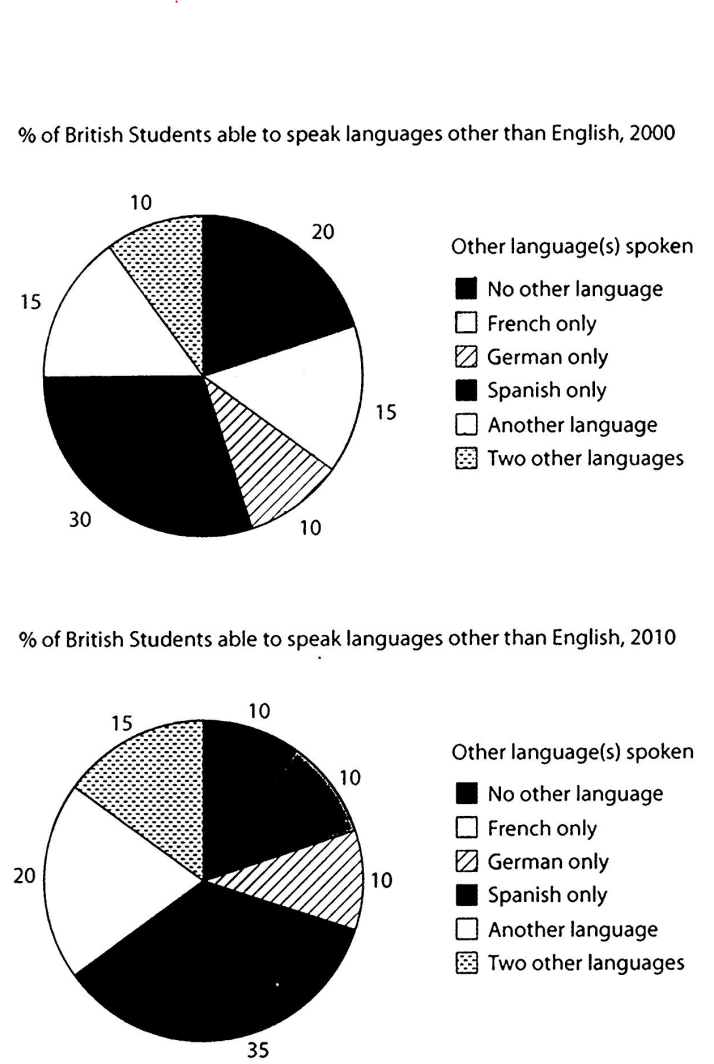
    The charts below show the proportions of British students at one university in England who were able to speak other languages in addition to English, in 2000 and 2010.


    Summarise the information by selecting and reporting the main features, and make comparisons where relevant.


    Write at least 150 words.

    IELTS 11 Test 2 Writing Task 1 (aided version No color for people with disabilities)

    Writing Task 2

    You should spend about 40 minutes on this task.

    Write about the following topic:

    Some people claim that not enough of the waste from homes is recycled. They say that the only way to increase recycling is for governments to make it a legal requirement.

    To what extent do you agree or disagree with this statement?

    Give reasons for your answer and include any relevant examples from your own knowledge or experience.

    Write at least 250 words.

    Cambridge IELTS 11 Academic Writing Test 2 Task 2 Model Answer (282 words)

    The pie charts illustrate the linguistic diversity among British students at a particular English university in 2000 and 2010. A noticeable trend is the increase in multilingual capabilities over this decade.

    In 2000, a significant majority, 30%, of students were monolingual, speaking only English. By contrast, this figure plummeted to just 15% by 2010. French was the second most common language spoken exclusively by students in both years (15% in 2000 and 10% in 2010). The proportion of German-only speakers remained constant at a modest 10%.

    A striking development is observed in the category of students proficient in two or more languages other than English. In 2000, only a small fraction (10%) fell into this category; however, by 2010, this segment had surged to constitute the largest group at an impressive 35%.

    Spanish-only speakers represented a consistent minority across both years at just under one-tenth of the student population.

    In summary, while there was a marked decline in monolingual English-speaking students from one-third to just over one-seventh over ten years, there was an equally notable rise in polyglots fluent in two or more additional languages from one-tenth to over one-third.

    Cambridge IELTS 11 Academic Writing Test 2 Task 1 Model Answer (190 words)

    I partially agree with the statement that government intervention could play a crucial role in increasing recycling rates, but I believe it is not the only solution. While legislation can set a framework and provide incentives for recycling, a holistic approach involving public awareness, education, and community engagement is equally essential.

    Firstly, government regulations can be effective in promoting recycling by imposing penalties for non-compliance and offering incentives for businesses and individuals who actively participate in recycling programs. For instance, some countries have successfully implemented laws that require the separation of recyclables from general waste, encouraging citizens to be more mindful of their waste disposal habits.

    However, a legal requirement alone might not be sufficient. Public awareness and education are pivotal in changing people’s attitudes towards recycling. Governments should invest in campaigns that inform citizens about the environmental benefits of recycling, the impact of waste on ecosystems, and the importance of reducing, reusing, and recycling materials. Additionally, community involvement through workshops and local initiatives can foster a sense of responsibility and commitment to sustainable waste management.

    Moreover, infrastructure plays a significant role in facilitating recycling. Governments should invest in efficient waste collection and recycling facilities, making it convenient for people to participate in recycling programs. Accessible recycling bins in public spaces, clear guidelines on what can be recycled, and collaboration with private sectors for innovative recycling solutions are all critical components of a comprehensive strategy.

    In conclusion, while government regulations are important, a multi-faceted approach involving public education, community engagement, and infrastructure development is necessary to create a sustainable and effective recycling system. A combination of legal requirements and proactive public involvement can maximize the impact on waste reduction and environmental conservation.

  • Cambridge IELTS 11 Speaking Test 1

    PART 1

    The examiner asks the candidate about him/herself, his/her home, work or studies and other familiar topics.

    EXAMPLE

    Food and cooking

    • What sorts of food do you like eating most? [why?]
    • Who normally does the cooking in your home? [why/why not?]
    • Do you watch cookery programmes on TV? [why/why not?]
    • In general, do you preferer eating out or eating at home? [why?]

    PART 2

    Describe a house/apartment that someone you know lives in.

    • You should say:
      • whose house/apartment this is
      • where the house/apartment is
      • what it looks like inside
      • and explain what you like or dislike about this person’s house/apartment
    • You will have to talk about the topic for one or two minutes.
    • You have one minute to think about what you are going to say.
    • You can make some notes to help you if you wish

    PART 3

    Discussion topics:

    Different types of home

    Example questions:

    What kinds of home are most popular in your country? Why is this?

    What do you think are the advantages of living in a house rather than an apartment?

    Do you think that everyone would like to live in a larger home? Why is that?

    Finding a place to live

    Example questions:

    How easy is it to find a place to live in your country?

    Do you think it’s better to rent or to buy a place to live in? Why?

    Do you agree that there’s a right age for young adults to stop living with their parents? Why is that?

    Cambridge IELTS 11 Speaking Test 1 part 1 model answers

    Here are the band 9 model answers for the Part 1 questions:

    • I have a diverse palate and enjoy a wide range of cuisines, but if I had to choose, I would say that I’m particularly fond of Mediterranean cuisine. The vibrant flavors, fresh ingredients, and emphasis on healthy cooking methods such as grilling and roasting appeal to me. Plus, the Mediterranean diet is renowned for its numerous health benefits, making it both delicious and nutritious.
    • In my household, cooking is a shared responsibility between family members. While my parents and I take turns preparing meals depending on our schedules, we often come together to cook as a family on weekends or special occasions. This not only fosters a sense of collaboration and teamwork but also allows us to bond over our shared love for food and cooking.
    • Yes, I do enjoy watching cookery programs on TV, as they provide inspiration, culinary tips, and creative ideas for cooking. Whether it’s learning new recipes, exploring different cooking techniques, or discovering culinary cultures from around the world, cookery programs offer a wealth of knowledge and entertainment for food enthusiasts like myself.
    • While I appreciate the convenience and social aspect of dining out, I tend to prefer eating at home for several reasons. Firstly, home-cooked meals are often healthier and more customizable, allowing me to control portion sizes, ingredients, and cooking methods. Additionally, eating at home provides a cozy and intimate atmosphere where I can relax, unwind, and enjoy quality time with family and friends without the distractions of a restaurant setting. Overall, I find that eating at home offers a more personalized and fulfilling dining experience.
    Cambridge IELTS 11 Speaking Test 1 part 2 model answers

    The house I’m going to describe belongs to my close friend, Sarah. She lives in a spacious apartment located in the heart of the city center. When you enter her apartment, you’re immediately struck by its modern and minimalist design. The walls are painted in soothing pastel colors, and large windows allow ample natural light to flood the space, creating a bright and airy atmosphere. The living room is tastefully furnished with comfortable sofas and stylish decor, creating a cozy yet elegant ambiance. The kitchen is sleek and well-equipped, with state-of-the-art appliances and ample counter space for cooking and entertaining.

    What I particularly like about Sarah’s apartment is the attention to detail in its design. Every element seems carefully curated, from the artwork on the walls to the choice of furniture and accessories. The overall effect is both inviting and sophisticated, making it a pleasure to spend time there.

    One aspect that I dislike, however, is the lack of outdoor space. Being in the city center, Sarah’s apartment doesn’t have a balcony or garden where one can relax and enjoy the outdoors. While the large windows provide stunning views of the cityscape, it would be nice to have a small outdoor area to unwind in, especially on sunny days.

    Overall, I admire Sarah’s apartment for its modern design and cozy ambiance, although I do wish it had a bit more outdoor space. Nonetheless, it’s a wonderful place to visit and spend time in, thanks to its inviting atmosphere and thoughtful design.

    Cambridge IELTS 11 Speaking Test 1 part 3 model answers

    Certainly, let’s discuss these topics.

    Different Types of Home:

    • What kinds of home are most popular in your country? Why is this?
      In my country, both houses and apartments are popular, but apartments tend to be more common, especially in urban areas. This is primarily due to the limited space in cities and the high population density, which makes apartments a more practical and affordable option for many people.
    • What do you think are the advantages of living in a house rather than an apartment?
      Living in a house offers several advantages over living in an apartment. Firstly, houses typically provide more space, both indoors and outdoors, which is ideal for families or those who enjoy privacy and personal space. Additionally, houses often come with amenities such as gardens, garages, and extra storage space, which may not be available in apartments. Finally, houses offer greater flexibility for customization and renovation, allowing homeowners to personalize their living space according to their preferences.
    • Do you think that everyone would like to live in a larger home? Why is that?
      While many people might appreciate the idea of living in a larger home, it ultimately depends on individual preferences and circumstances. Some may prioritize convenience and low maintenance, making a smaller home or apartment more desirable. Others may value space and comfort, especially if they have a large family or enjoy entertaining guests. Ultimately, the ideal home size varies from person to person, and there isn’t a one-size-fits-all answer.

    Finding a Place to Live:

    • How easy is it to find a place to live in your country?
      In my country, the ease of finding a place to live depends on various factors such as location, budget, and demand. In urban areas, where there’s high demand for housing, finding a suitable place to live can be competitive and challenging, especially for affordable options. However, in rural areas or smaller towns, housing options may be more readily available and less expensive.
    • Do you think it’s better to rent or to buy a place to live in? Why?
      The decision between renting and buying depends on individual circumstances and preferences. Renting offers flexibility and requires less upfront financial commitment, making it ideal for those who value mobility or are unsure about long-term plans. On the other hand, buying a home provides stability and the opportunity to build equity over time. It also offers the freedom to customize and make changes to the property. Ultimately, the best choice depends on factors such as financial situation, lifestyle, and long-term goals.
    • Do you agree that there’s a right age for young adults to stop living with their parents? Why is that?
      There isn’t a universally “right” age for young adults to stop living with their parents, as it varies depending on cultural norms, individual circumstances, and personal preferences. Some may choose to leave home for higher education or job opportunities, while others may stay longer to save money or support their families. Ultimately, the decision should be based on factors such as financial independence, readiness for independence, and the dynamics of the parent-child relationship.
  • Cambridge IELTS 11 Academic Writing Test 1

    Writing Task 1

    You should spend about 40 minutes on this task. Write about the following topic:

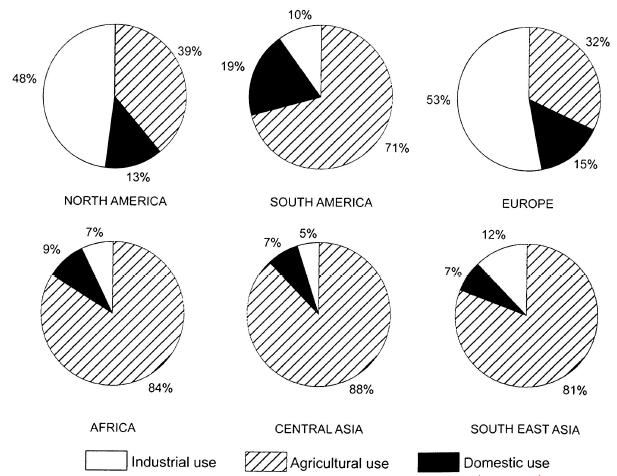
    The chart below shows the percentage of water used for different purposes in six areas of the world.


    Summarise the information by selecting and reporting the main features, and make comparisons where relevant.


    Write at least 150 words.

    Cambridge IELTS 11 Writing Test 1 Task 1 The chart below shows the percentage of water used for different purposes in six areas of the world.

    Writing Task 2

    You should spend about 40 minutes on this task.

    Write about the following topic:

    Governments should spend money on railways rather than roads.

    To what extent do you agree or disagree with this statement?

    Give reasons for your answer and include any relevant examples from your own knowledge or experience.

    Write at least 250 words.

    Cambridge IELTS 11 Academic Writing Test 1 Task 1 Model Answer (212 words)

    The chart illustrates the distribution of water usage across three different sectors: industrial, agricultural, and domestic in six distinct regions of the world.

    In North America, water is almost equally distributed among industrial (48%), agricultural (39%), and domestic (13%) purposes. Europe follows a similar pattern with a slightly higher emphasis on domestic use at 53%, while industrial and agricultural uses are at 32% and 15% respectively.

    South America stands out with its heavy reliance on water for agriculture at 71%, leaving only 19% for domestic use and a mere 10% for industrial purposes. Central Asia mirrors this trend but has an even higher dependence on agricultural water use at an impressive 88%.

    Africa’s water usage pattern aligns more with South America and Central Asia; however, it has a slightly lower percentage allocated to agriculture (84%) but compensates with higher domestic use (9%).

    South East Asia presents a balanced scenario similar to Europe but leans more towards domestic consumption which stands at 81%. Industrial use is minimal at just 7%, akin to Africa’s statistics.

    In summary, there’s a clear divide where Africa, Central Asia, and South America are heavily reliant on water for agricultural purposes while Europe, North America, and South East Asia have more balanced distributions with significant allocations towards domestic consumption.

    Cambridge IELTS 11 Academic Writing Test 1 Task 2 Model Answer (282 words)

    The question of whether governments should prioritize spending on railways rather than roads is a complex one, and opinions may vary based on specific circumstances and priorities. While both railways and roads are crucial components of transportation infrastructure, the optimal allocation of resources depends on various factors such as population density, geographical features, and economic considerations.

    One argument in favor of investing in railways is their potential for efficiency and sustainability. Rail transport tends to be more energy-efficient and environmentally friendly compared to road transportation. Trains can carry large volumes of goods and passengers over long distances with lower energy consumption per ton-mile or passenger-mile. Moreover, railways can alleviate congestion on roads, reduce air pollution, and contribute to a more sustainable transportation system.

    On the other hand, roads are often more versatile and accessible than railways. They provide door-to-door connectivity, allowing for more flexible point-to-point transportation. In regions with dispersed populations or where the terrain is challenging, investing in road infrastructure might be a more practical choice. Additionally, roads can be crucial for economic development, as they facilitate the movement of goods, services, and people, supporting local businesses and industries.

    Countries like Japan and several European nations have successfully integrated extensive railway networks into their transportation systems, promoting efficiency and reducing environmental impacts. However, in countries with vast landscapes or lower population densities, investing in road infrastructure may be a more pragmatic approach.

    In conclusion, the allocation of resources between railways and roads should be based on a careful assessment of specific geographical, economic, and environmental factors. Both modes of transportation play vital roles, and a balanced approach that considers the unique needs of each region is likely the most effective strategy.

  • Cambridge IELTS 11 Listening Test 4

    Section 1Questions 1-10

    Questions 1-7

    Complete the table below.

    Write ONE WORD AND/OR A NUMBER.

    EventCostVenueNotes
    Jazz bandtickets available for £ 15the (1)…………….schoolalso appearing: Carolyn Hart (plays the (2)……………..)
    Duck races£ 1 per duckstart behind the (3)………………– prize: tickets for (4)……………..held at the end of the festival \
    – ducks can be bought in (5)……………..
    Flower showfree(6)……………….Hallprizes presented at 5 pm by a well known (7)……………….
    Questions 8-10

    Who is each play suitable for?

    Write the correct letter A, B or C, next to Questions 8-10

    A mainly for children
    B mainly for adults
    C suitable for people of all ages

    Plays

    1. The Mystery of Muldoon 
    2. Fire and Flood 
    3. Silly Sailor 

    SECTION 2Questions 11-20

    Questions 11-16

    What does the speaker say about each of the following collections?

    Choose SIX answers from the box and write the correct letter, A-G, next to Questions 11-16.

    Comments
    A was given by one person
    B was recently publicized in the media
    C includes some items given by members of the public
    D includes some items given by the artists
    E includes the most popular exhibits in the museum
    F is the largest of its kind in the country
    G has had some of its contents relocated
    • Collections
      1. 20th-and 21st-century paintings 
      2. 19th-century paintings 
      3. Sculptures 
      4. Around the world’ exhibition 
      5. Coins 
      6. Porcelain and glass 
    Questions 17-20

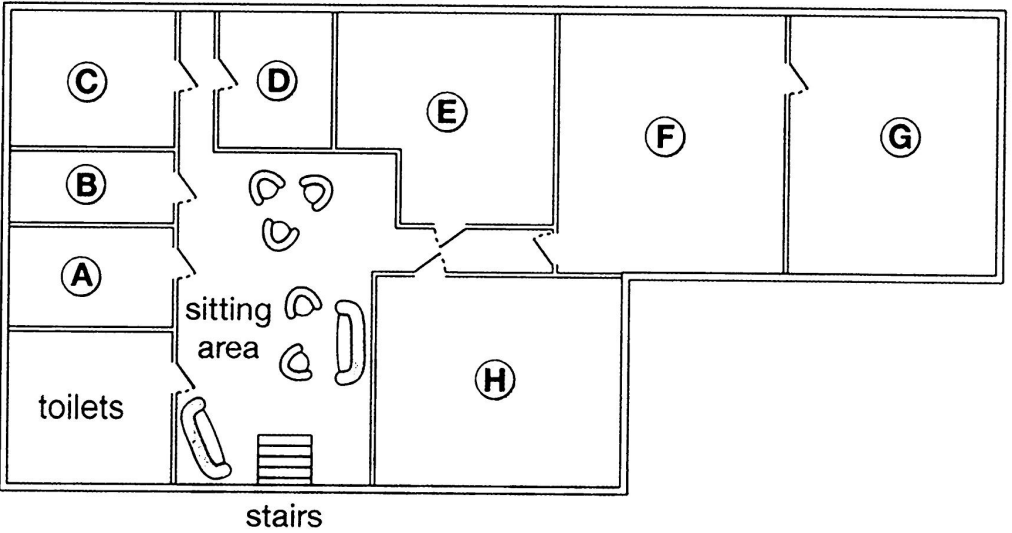
    Label the plan below.

    Write the correct letter A-H, next to questions 17-20.

    Basement of museum

    Cambridge IELTS 11 Listening Test 4 basement of museum map Questions 17-20.PNG
    1. restaurant …………………………….
    2. cafe …………………………….
    3. baby-changing facilities …………………………….
    4. cloakroom …………………………….

    SECTION 3Questions 21 – 30

    Questions 21 and 22

    Choose Two letters, A-E.

    Which TWO characteristics were shared by the subjects of Joanna’s psychology study?

    1.  They had all won prizes for their music
    2.  They had all made music recordings
    3.  They were all under 27 years old
    4.  They had all toured internationally
    5.  They all played a string instrument
    Questions 23 and 24

    Choose Two letters, A-E.

    Which TWO points does Joanna make about her use of telephone interviews?

    1.  It meant rich data could be collected
    2.  It allowed the involvement of top performers
    3.  It led to a stressful atmosphere at times
    4.  It meant interview times had to be limited
    5.  It caused some technical problems
    Questions 25 and 26

    Choose Two letters, A-E.

    Which TWO topics did Joanna originally intend to investigate in her research?

     A regulations concerning concert dress
     B audience reactions to the dress of performers
     C changes in performer attitudes to concert dress
     D how choice of dress relates to performer roles
     E links between musical instrument and dress choice

    Questions 27-30

    Choose the correct letter A, B or C.

    1. Joanna concentrated on women performers because
      1. women are more influenced by fashion
      2. women’s dress has led to more controversy
      3. women’s code of dress is less strict than men’s
    2. Mike Frost’s article suggests that in popular music, women’s dress is affected by
      1. their wish to be taken seriously
      2. their tendency to copy each other
      3. their reaction to the masculine nature of the music
    3. What did Joanna’s subjects say about the audience at a performance?
      1. The musicians’ choice of clothing is linked to respect for the audience
      2. The clothing should not distract the audience from the music
      3. The audience should make the effort to dress appropriately
    4. According to the speakers, musicians could learn from sports scientists about
      1. the importance of clothing for physical freedom
      2. the part played by clothing in improving performance
      3. the way clothing may protect against physical injury

    SECTION 4Questions 31 – 40

    Complete the notes below.

    Write ONE WORD ONLY for each answer.

    The use of soil to reduce carbon dioxide (CO2) in the atmosphere

    • Rattan Lal:
      • Claims that 13% of CO2 in the atmosphere could be absorbed by agricultural soils
      • Erosion is more likely in soil that is (31) ……………………………………
      • Lai found soil in Africa that was very (32) ……………………………………
      • It was suggested that carbon from soil was entering the atmosphere
    • Soil and Carbon:
      • Plants turn CO2 from the air into carbon based substance such as (33) ……………………………………
      • Some CO2 moves from the (34) …………………………………… of plants to microbes in soil
      • Carbon was lost from the soil when agriculture was invented
    • Regenerative agriculture:
      • uses established practices to make sure soil remains fertile and (35) ……………………………………
      • e.g. through year-round planting and increasing the (36) …………………………………… of plants that are grown
    • California study:
      • taking place on a big (37) …………………………………… farm
      • uses compost made from waste from agriculture and (38) ……………………………………
    • Australia study:
      • aims to increase soil carbon by using (39) …………………………………… that are always green
    • Future developments may include:
      • reducing the amount of fertilizer used in farming
      • giving farmers (40) …………………………………… for carbon storage, as well as their produce
    Section 1 Free activities in the Burnham area Answers Cambridge IELTS 11 Listening Test 4
    1. secondary
    2. flute
    3. cinema
    4. concert
    5. market
    6. Bythwaite
    7. actor
    8. A
    9. B
    10. C
    Section 2 Answers Cambridge IELTS 11 Listening Test 4
    1. E
    2. D
    3. G
    4. B
    5. C
    6. A
    7. F
    8. H
    9. C
    10. B
    Section 3 Answers Cambridge IELTS 11 Listening Test 4
    1. B D (IN EITHER ORDER)
    2. B D (IN EITHER ORDER)
    3. A B (IN EITHER ORDER)
    4. A B (IN EITHER ORDER)
    5. B E (IN EITHER ORDER)
    6. B E (IN EITHER ORDER)
    7. C
    8. A
    9. A
    10. C
    Section 4 Answers Cambridge IELTS 11 Listening Test 4
    1. dry
    2. hard
    3. sugar(s)
    4. roots
    5. moist/ damp/ wet
    6. variety
    7. cattle
    8. gardens / gardening
    9. grasses
    10. payment(s) / money
  • Cambridge IELTS 11 Listening Test 3

    Section 1Questions 1-10

    Questions 1-6

    Choose the correct letter A, B or C

    Free activities in the Burnham area

    Example

    • The caller wants to find out about events on
      1. 27 June
      2. 28 June
      3. 29 June (Correct Answer)
    1. The Family Welcome event in the art gallery begins at
      1.  10 am
      2.  10.30 am
      3.  2 pm
    2. The film that is now shown in the Family Welcome event is about
      1.  sculpture
      2.  painting
      3.  ceramics
    3. When do most of the free concerts take place?
      1.  in the morning
      2.  at lunchtime
      3.  in the evening
    4. Where will the 4 pm concert of Latin American music take place?
      1.  in a museum
      2.  in a theatre
      3.  in a library
    5. The boat race begins at
      1.  summer pool
      2.  Charlesworth bridge
      3.  Oxford marina
    6. One of the boat race teams
      1.  won a regional competition earlier this year
      2.  has represented the region in a national competition
      3.  has won several regional competitions
    Questions 7-10

    Complete the sentences below.

    Write ONE WORD ONLY for each answer.

    Paxton Nature Reserve

    1. Paxton is a good for seeing rare  all year around.
    2. This is a particularly good time for seeing certain unusual 
    3. Visitors will be able to learn about  and then collect some.
    4. Part of the  has been made suitable for swimming.

    SECTION 2Questions 11-20

    Questions 11-15

    Choose the correct letter A, B or C

    Changes in Barford over the last 50 years

    1. In Shona’s opinion why do fewer people use buses in Barford these days?
      1. the buses are old and uncomfortable
      2. fares have gone up too much
      3. there are not so many bus routes
    2. What change in the road network is known to have benefitted the town most?
      1. the construction of a bypass
      2. the development of cycle paths
      3. the banning of cars from certain streets
    3. What is the problem affecting shopping in the town centre?
      1. lack of parking spaces
      2. lack of major retailers
      3. lack of restaurants and cafes
    4. What does Shona say about medical facilities in Barford?
      1. there is no hospital
      2. new medical practices are planned
      3. the number of dentists is too low
    5. The largest number of people are employed in
      1. manufacturing
      2. services
      3. education
    Questions 16-20

    What is planned for each of the following facilities?

    Choose FIVE answers from the box and write the correct letter A-G next to questions 16-20

    Plans
    A it will move to a new location
    B it will have its opening hours extended
    C it will be refurbished
    D it will be used for a different purpose
    E it will have its opening hours reduced
    F it will have new management
    G it will be expanded

    Facilities

    1. railway station car park ………………………………………….
    2. cinema ………………………………………….
    3. indoor market ………………………………………….
    4. library ………………………………………….
    5. nature reserve ………………………………………….

    SECTION 3Questions 21 – 30

    Questions 21-26

    Complete the table below.

    Write ONE WORD ONLY for each answer.

    Subject of drawingChange to be made
    A (21) …………………………………………. surrounded by treesAdd Malcolm and a (22) …………………………………………. noticing him
    People who are (23) …………………………………………. outside the forestAdd Malcolm sitting on a tree trunk and (24) ………………………………………….
    Ice shakes on (25) …………………………………………. covered with iceAdd a (26) …………………………………………. for each person
    Questions 27-30

    Who is going to write each of the following parts of the report?

    Write the correct letter A-D next to questions 27-30.

    A Helen only
    B Jeremy only
    C both Helen and Jeremy
    D neither Helen nor Jeremy

    Parts of the report

    1. how they planned the project 
    2. how they had ideas for their stories 
    3. an interpretation of their stories 
    4. comments on the illustrations 

    SECTION 4Questions 31 – 40

    Complete the notes below.

    Write ONE WORD ONLY for each answer.

    Ethnography in Business

    • Ethnography: research which explores human cultures
    • It can be used in business:
      • To investigate customer needs and (31) ……………………………………….
      • To help companies develop new designs
    • Examples of ethnographic research in business
    • Kitchen equipment
      • Researchers found that cooks could not easily see the (32) ………………………………………. in measuring cups
    • Cell phone
      • In Uganda, customers paid to use the cell phones of entrepreneurs.
      • These customers wanted to check the (33) ………………………………………. used.
    • Computer companies
      • There was a need to develop (34) ………………………………………. to improve communication between system administrators and colleagues.
    • Hospitals
      • Nurses needed to access information about (35) ………………………………………. in different parts of the hospital
    • Airlines
      • Respondents recorded information about their (36) ………………………………………. while travelling.
    • Principles of ethnographic research in business
      • The researched does not start off with a hypothesis
      • Participants may be selected by criteria such as age, (37) ………………………………………. or product used
      • The participants must feel (38) ………………………………………. about taking part in the research.
      • There is usually direct (39) ………………………………………. of the participants
      • The interview is guided by the participant
      • A lot of time is needed for the (40) ………………………………………. of the data.
      • Researchers look for a meaningful pattern in the data.
    Section 1 Free activities in the Burnham area Answers Cambridge IELTS 11 Listening Test 3
    1. B
    2. C
    3. B
    4. A
    5. C
    6. A
    7. birds
    8. flowers
    9. mushrooms
    10. river
    Section 2 Answers Cambridge IELTS 11 Listening Test 3
    1. C
    2. B
    3. B
    4. A
    5. C
    6. G
    7. A
    8. C
    9. B
    10. F
    Section 3 Answers Cambridge IELTS 11 Listening Test 3
    1. cave
    2. tiger
    3. dancing
    4. crying
    5. grass
    6. scarf
    7. A
    8. C
    9. D
    10. B
    Section 4 Answers Cambridge IELTS 11 Listening Test 3
    1. attitude(s)
    2. numbers
    3. time/ minutes
    4. software
    5. patients
    6. emotions/ feelings
    7. income
    8. comfortable
    9. observation
    10. analysis
  • Cambridge IELTS 11 Listening Test 2

    Section 1Questions 1-10

    Complete the notes below.

    Write ONE WORD AND/OR A NUMBER.

    Enquiry about joining Youth Council

    • Example
      • Name …………….Roger………………..
    • Age 18
    • Currently staying in a (1)………………………………………………  during the week
    • Postal address: (2) 17, ………………………………………………   Street, Stamford, Lincs
    • Postcode: (3) ………………………………………………
    • Occupation: student and part time job as a (4) ………………………………………………
    • Studying (5) ……………………………………………… (major subject) and history (minor subject)
    • Hobbies: does a lot of (6) ………………………………………………, and is interested in the (7)  ………………………………………………
    • Will come to talk to the Elections Officer next Monday at (9) ……………………………………………… pm
    • Mobile number: (10) ………………………………………………

    SECTION 2Questions 11-20

    Questions 11 and 12

    Choose TWO letters A-E.

    New staff at theatre

    Which TWO changes have been made so far during the refurbishment of the theatre?

    1.  Some rooms now have a different use.
    2.  A different type of seating has been installed.
    3.  An elevator has been installed.
    4.  The outside of the building has been repaired.
    5.  Extra seats have been added.
    Questions 13 and 14

    Choose TWO letters A-E.

    Which TWO facilities does the theatre currently offer to the public?

    1. rooms for hire
    2. backstage tours
    3. hire of costumes
    4. a bookshop
    5. a cafe
    Questions 15 and 16

    Choose TWO letters A-E.

    1. Which TWO workshops does the theatre currently offer?
      1. sound
      2. acting
      3. making puppets
      4. make-up
      5. lighting
    Questions 17 -20

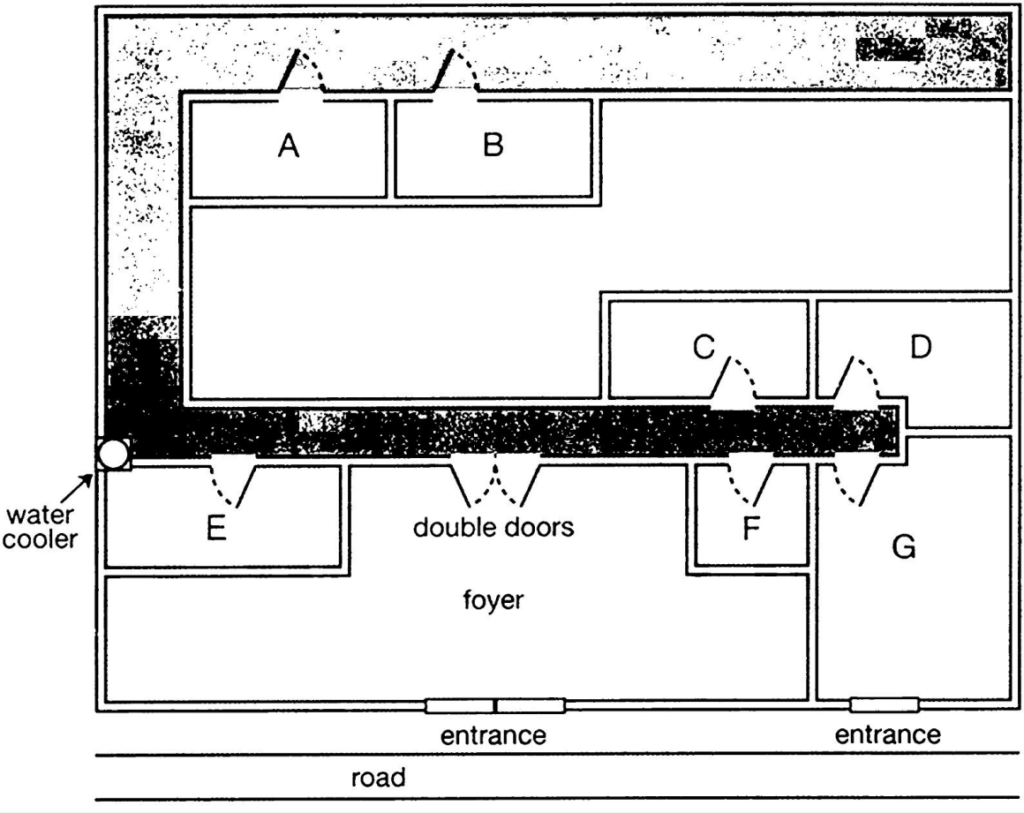
    Label the plan below.

    Write the correct letter A-G, next to questions 17-20.

    Ground floor plan of theatre

    Cambridge IELTS 11 Listening Test 2 ground floor plan of theater
    1. box office …………………………………………
    2. theatre manager’s office …………………………………………
    3. lighting box …………………………………………
    4. artistic director’s office …………………………………………

    SECTION 3Questions 21 – 30

    Questions 21-26

    Choose the correct letter A, B or C.

    Rocky Bay field trip

    1. What do the students agree should be included in their aims?
      1.  factors affecting where organisms live
      2.  the need to preserve endangered species
      3.  techniques for classifying different organisms
    2. What equipment did they forget to take on the Field Trip?
      1.  string
      2.  a compass
      3.  a ruler
    3. In Helen’s procedure section, Colin suggests a change in
      1.  the order in which information is given
      2.  the way the information is divided up
      3.  the amount of information provided
    4. What do they say about the method they used to measure wave speed?
      1.  It provided accurate results
      2.  It was simple to carry out
      3.  It required special equipment
    5. What mistake did Helen make when first drawing the map?
      1.  She chose the wrong scale
      2.  She stood in the wrong place
      3.  She did it at the wrong time
    6. What do they decide to do next with their map?
      1.  scan it onto a computer
      2.  check it using photographs
      3.  add information from the internet
    Questions 27 and 28

    Choose TWO letters A-E.

    Which TWO problems affecting organisms in the splash zone are mentioned?

    1.  lack of water
    2.  strong winds
    3.  lack of food
    4.  high temperatures
    5.  large waves
    Questions 29 and 30

    Choose TWO letters A-E.

    Which TWO reasons for possible error will they include in their report?

    1. inaccurate records of the habitat of organisms
    2. influence on behaviour of organisms by observer
    3. incorrect identification of some organisms
    4. making generalisations from a small sample
    5. missing some organisms when counting

    SECTION 4Questions 31 – 40

    Complete the notes below.

    Write ONE WORD ONLY.

    DESIGNING A PUBLIC BUILDING:

    THE TAYLOR CONCERT HALL

    • introduction
      • The designer of a public building may need to consider the building’s
        • Function
        • Physical and (31) ………………………………………. context
        • at first only identified on land
    • Location and concept of the Concert Hall
      • On the site of a discussed (32)  ……………………………………….
      • Beside a (33) ……………………………………….
      • The design is based on the concept of a mystery
    • Building design
      • It’s approached by a (34)  ………………………………………. for pedestrians
      • The building is the shape of a (35) ……………………………………….
      • One exterior wall acts as a large (36) ……………………………………….
    • In the auditorium:
      • The floor is built on huge pads made of (37) ……………………………………….
      • The walls are made of local wood and are (38) ………………………………………. in shape
      • Ceiling panels and (39) ………………………………………. on walls allow adjustment of acoustics
    • Evaluation
      • Some critics say the (40) ………………………………………. style of building is inappropriate
    Section 1 Enquiry about joining Youth Council Answers Cambridge IELTS 11 Listening Test 2
    1. hostel
    2. Buckleigh
    3. PE9 7QT
    4. waiter
    5. politics
    6. cycling
    7. cinema
    8. disabled
    9. 4.30 (pm) / half past four
    10. 07788136711
    Section 2 Answers Cambridge IELTS 11 Listening Test 2
    1. A & B (IN EITHER ORDER)
    2. A & B (IN EITHER ORDER)
    3. B & D (IN EITHER ORDER)
    4. B & D (IN EITHER ORDER)
    5. C & E (IN EITHER ORDER)
    6. C & E (IN EITHER ORDER)
    7. G
    8. D
    9. B
    10. F
    Section 3 Answers Cambridge IELTS 11 Listening Test 2
    1. A
    2. A
    3. C
    4. B
    5. B
    6. B
    7. A & D (IN EITHER ORDER)
    8. A & D (IN EITHER ORDER)
    9. C & E (IN EITHER ORDER)
    10. C & E (IN EITHER ORDER)
    Section 4 Answers Cambridge IELTS 11 Listening Test 2
    1. social
    2. factory
    3. canal
    4. bridge
    5. box
    6. screen
    7. rubber
    8. curved
    9. curtains
    10. international
  • The dead sea reading comprehension worksheet

    • Reading Passage info:
      • 5 page Reading comprehension printable worksheet with a total of 40 questions
      • Suitable for:
        • Beginners
        • ESL Reading Comprehensions with Questions
        • Young Readers, grade 1-3
        • Age 5-10
      • Questions included:
        • Direct questions (10 Short answer questions)
        • Multiple choice questions (8 Questions)
        • Fill-in the blanks questions (8 Questions)
        • True or false questions (8 Questions)
        • Critical thinking questions (6 Questions)
      • Free to print or use anywhere.

    Have you heard of the Dead Sea? It’s a very special place! The Dead Sea is not like other seas or oceans. It’s a big salty lake between Jordan and Palestine..

    The water in the Dead Sea is super salty. It’s so salty that people can float easily on it! When you go swimming in the Dead Sea, you will not sink. It’s like magic!

    Because of the salt in the water, nothing can live in the Dead Sea. That’s why it’s called the Dead Sea. But even though no fish or plants can live there, it’s still an amazing place!

    The mud in the Dead Sea is special too. People come from all over the world to put the mud on their skin. They say it makes their skin feel soft and nice.

    The Dead Sea is also famous for its minerals. These minerals are good for our bodies. Many people believe that taking a soak in the Dead Sea can make them feel better.

    People love visiting the Dead Sea. They like floating in the water, playing with the mud, and feeling the special minerals. It’s a unique place that makes people happy!

    The Dead Sea is a wonderful and special place. Maybe one day you’ll get to visit it too and experience the magic of floating on its salty waters!

  • Cambridge IELTS 11 Listening Test 1

    Section 1Questions 1-10

    Complete the notes below.

    Write NO MORE THAN one word only for each answer.

    HIRING A PUBLICH ROOM

    • Example
      • The main Hall seats …………………200………………………..
    • Room and cost
      • The (1) ……………………………………………… room seats 100
      • Cost of main hall for Saturday evening: (2)……………………………………………… £  + £250 deposit (3)………………………………………………  payment is required)
      • Cost includes use of tables and chairs and also (4) ……………………………………………… 
      • Additional charge for use of the kitchen: £25
    • Before the charge
      • Will need a (5) ………………………………………………  licence
      • Need to contact caretaker (Mr Evans) in advance to arrange (6) ……………………………………………… 
    • During the event
      • The building is no smoking
      • The band should use the (7)………………………………………………   door at the back
      • Don’t touch the system that controls the volume
      • For microphones, contact the caretaker
    • After the event
      • Need to know the (8)………………………………………………   for the cleaning cupboard
      • The (9)………………………………………………   must be washed and rubbish placed in black bags
      • All (10)………………………………………………   must be taken down
      • Chairs and tables must be piled up

    SECTION 2Questions 11-20

    Questions 11-14

    Complete the notes below.

    Write ONE WORD for each answer.

    Fiddy Working Heritage Farm

    Advice about visiting the farm

    Visitors should
    • Take care not to harm any (11) ……………………………………………… 
    • Not touch any (12) ……………………………………………… 
    • Wear (13) ……………………………………………… 
    • Not bring (14) ………………………………………………  into the farm, with certain exceptions

    Questions 15-20

    Label the map below.

    Write the correct letter A-I, next to questions 15-20.

    Cambridge IELTS 10 Listening Test 1 HIRING A PUBLICH ROOM Questions 15-20
    15. Scarecrow …………………………..16. Maze …………………………..
    17. Café …………………………..18. Black Barn …………………………..
    19. Covered picnic area …………………………..20. Fiddy house …………………………..

    SECTION 3Questions 21 – 30

    Choose the correct letter A, B or C.

    Study on Gender in Physics

    1. The students in Akira Miyake’s study were all majoring in
      1.  physics
      2.  psychology or physics
      3.  science, technology, engineering or mathematics
    2. The aim of Miyake’s study was to investigate
      1. what kind of women choose to study physics
      2. a way of improving women’s performance in physics
      3. whether fewer women than men study physics at college
    3. The female physics students were wrong to believe that
      1.  the teachers marked them in an unfair way
      2.  the male students expected them to do badly
      3.  their test results were lower than the male students’
    4. Miyake’s team asked the students to write about
      1.  what they enjoyed about studying physics
      2.  the successful experiences of other people
      3.  something that was important to them personally
    5. What was the aim of the writing exercise done by the subjects?
      1.  to reduce stress
      2.  to strengthen verbal ability
      3.  to encourage logical thinking
    6. What surprised the researchers about the study?
      1.  how few students managed to get A grades
      2.  the positive impact it had on physics results for women
      3.  the difference between male and female performance
    7. Greg and Lisa think Miyake’s results could have been affected by
      1.  the length of the writing task
      2.  the number of students who took part
      3.  the information the students were given
    8. Greg and Lisa decide that in their own project, they will compare the effects of
      1.  two different writing tasks
      2.  a writing task with an oral task
      3.  two different oral tasks
    9. The main finding of Smolinsky’s research was that class teamwork activities
      1.  were most effective when done by all-women groups
      2.  had no effect on the performance of men or women
      3.  improved the results of men more than of women
    10. What will Lisa and Greg do next?
      1.  talk to a professor
      2.  observe a science class
      3.  look at the science timetable

    SECTION 4Questions 31 – 40

    Complete the notes below.

    Write ONE WORD ONLY.

    Ocean Biodiversity

    • Biodiversity hotspots
      • areas containing many different species
      • important for locating targets for (31) ……………………………………….
      • at first only identified on land
    • Boris Worm, 2005
      • identified hotspots for large ocean predators, e.g. sharks
      • found that ocean hotspots:
        • were not always rich in (32) ……………………………………….
        • had higher temperatures at the (33) ……………………………………….
        • had sufficient (34) ………………………………………. in the water
    • Lisa Ballance, 2007
      • looked for hotspots for marine (35) ……………………………………….
      • found these were all located where ocean currents meet
    • Census of Marine Life
      • found new ocean species living:
        • under the (36) ……………………………………….
        • near volcanoes on the ocean floor
    • Global Marine Species Assessment
      • want to list endangered ocean species, considering:
        • population size
        • geographical distribution
        • rate of (37) ……………………………………….
      • Aim: to assess 20,000 species and make a distribution (38) ……………………………………….  for each one
    • Recommendations to retain ocean biodiversity
      • increase the number of ocean reserves
      • establish (39) ……………………………………….  corridors (e.g. for turtles)
      • reduce fishing quotas
      • catch fish only for the purpose of (40) ………………………………………. 
    Section 1 HIRING A PUBLICH ROOM Answers Cambridge IELTS 11 Listening Test 1
    1. Charlton
    2. £115 / one hundred (and) fifteen
    3. cash
    4. parking
    5. music
    6. entry
    7. stage
    8. code
    9. floors / floor
    10. decorations / decoration
    Section 2 Answers Cambridge IELTS 11 Listening Test 1
    1. animals / animal
    2. tools / tool
    3. shoes
    4. dogs / dog
    5. F
    6. G
    7. D
    8. H
    9. C
    10. A
    Section 3 Answers Cambridge IELTS 11 Listening Test 1
    1. C
    2. B
    3. B
    4. C
    5. A
    6. B
    7. C
    8. A
    9. B
    10. A
    Section 4 Answers Cambridge IELTS 11 Listening Test 1
    1. conservation
    2. foods / food
    3. surface
    4. oxygen / O2
    5. mammals
    6. ice
    7. decline / declining / decrease
    8. map
    9. migration
    10. consumption