Author: Admin

  • Cambridge IELTS 9 Listening Test 1

    Section 1: Questions 1-10

    Complete the notes below.

    Write NO MORE THAN THREE WORDS AND/OR A NUMBER for each answer

    JOB ENQUIRY

    Example:

    • Works at ……a restuarant………
    • Type of work: (1) ………………………….
    • Number of hours per week: 12 hours
    • Would not need work permit
    • Work in the: (2) …………………………….branch
    • Nearest bus stop: next to (3) …………………………
    • Pay (4) £ ………………………. an hour
    • Extra benefits
      • a free dinner
      • extra pay when you work on (5)…………………………….
      • transport home when you work (6)……………………………..
    • Qualities required
      • (7) …………………………………
      • ability to (8) ………………………………..
    • Interview arranged for: Thursday (9) ………………………………….. at 6 p.m.
    • Bring the names of two referees
    • Ask for: Samira (10) …………………………….

    Section 2: Questions 11-20

    Questions 11-16

    Complete the notes below.

    Write ONE WORD AND/OR A NUMBER for each answer.

    SPORTS WORLD


    • a new (11) …………………………………..of an international sports goods company
    • located in the shopping centre to the (12) ………………………………….. of Bradcaster
    • has sports (13) ………………………………….. and equipment on floors 1 – 3
    • can get you any item within (14) ………………………………….. days
    • shop specialises in equipment for (15) …………………………………..
    • has a special section which just sells (16) …………………………………..

    Questions 17 and 18

    Choose the correct letter, A, B or C.

    1. A champion athlete will be in the shop
      1. on Saturday morning only
      2. all day Saturday
      3. for the whole weekend
    2. The first person to answer 20 quiz questions correctly will win
      1. gym membership
      2. a video
      3. a calendar
    Questions 19 and 20

    Choose TWO letters, A-E.

    Which TWO pieces of information does the speaker give about the fitness test?

    1. You need to reserve a place
    2. It is free to account holders
    3. You get advice on how to improve your health
    4. It takes place in a special clinic
    5. It is cheaper this month

    Section 3: Questions 21-30

    Choose the correct letter, A, B or C.

    Course Feedback

    1. One reason why Spiros felt happy about his marketing presentation was that
      1. he was not nervous
      2. his style was good
      3. the presentation was the best in his group
    2. What surprised Hiroko about the other students’ presentations?
      1. Their presentations were not interesting ‘
      2. They found their presentations stressful
      3. They didn’t look at the audience enough
    3. After she gave her presentation, Hiroko felt
      1. delighted
      2. dissatisfied
      3. embarrassed
    4. How does Spiros feel about his performance in tutorials?
      1. not very happy
      2. really pleased
      3. fairly confident
    5. Why can the other students participate so easily in discussions?
      1. They are polite to each other
      2. They agree to take turns in speaking
      3. They know each other well
    6. Why is Hiroko feeling more positive about tutorials now?
      1. She finds the other students’ opinions more interesting
      2. She is making more of a contribution
      3. The tutor includes her in the discussion
    7. To help her understand lectures, Hiroko
      1. consulted reference materials
      2. had extra tutorials with her lecturers
      3. borrowed lecture notes from other students
    8. What does Spiros think of his reading skills?
      1. He reads faster than he used to
      2. It still takes him a long time to read
      3. He tends to struggle with new vocabulary
    9. What is Hiroko’s subject area?
      1. environmental studies
      2. health education
      3. engineering
    10. Hiroko thinks that in the reading classes the students should
      • A learn more vocabulary
      • B read more in their own subject areas
      • C develop better reading strategies

    Section 4: Questions 31-40

    Complete the notes below.

    Write NO MORE THAN TWO WORDS.

    Mass Strandings of Whales and Dolphins


    Mass strandings: situations where groups of whales, dolphins, etc. swim onto the beach and die
    Common in areas where the (31) ………………………………….. can change quickly
    Several other theories:

    Parasites
    e.g. some parasites can affect marine animals’ (32) ………………………………….. ,which they depend on for navigation

    Toxins
    Poisons from (33) ………………………………….. or are commonly consumed by whales
    e.g. Cape Cod (1988) – whales were killed by saxitoxin
    Accidental Strandings
    Animals may follow prey ashore, e.g. Thurston (1995)
    Unlikely because the majority of animals were not (34) ………………………………….. when they stranded

    Human Activity
    (35) ………………………………….. from military tests are linked to some recent strandings
    The Bahamas (2000) stranding was unusual because the whales
    • were all (36) …………………………………..
    • were not in a (37) …………………………………..

    Group Behaviour
    • More standings in the most (38) ………………………………….. species of whales
    • 1994 dolphin stranding – only the (39) ………………………………….. was ill
    Further Reading
    Marine Mammals Ashore (Connor) – gives information about stranding (40) …………………………………..

    Section 1 Answers Cambridge 9 Listening Test 1
    1. answering the phone
    2. hillsdunne road
    3. library
    4. 4.45
    5. national holidays
    6. after 11’o clock
    7. clear voice
    8. think quickly
    9. 22 october
    10. Manuja
    Section 2 Answers Cambridge 9 Listening Test 1
    1. branch
    2. west
    3. clothing
    4. 10
    5. running
    6. bags
    7. A
    8. A
    9. A
    10. E
    Section 3 Answers Cambridge 9 Listening Test 1
    1. B
    2. C
    3. B
    4. A
    5. C
    6. B
    7. A
    8. B
    9. C
    10. B
    Section 4 Answers Cambridge 9 Listening Test 1
    1. tides
    2. hearing/ ears
    3. plants and animals
    4. feeding
    5. noises
    6. healthy
    7. group
    8. social
    9. leader
    10. networks
  • Cambridge IELTS 8 Listening Test 4

    Part 1: Questions 1-10

    Complete the notes below.

    Write NO MORE THAN TWO WORDS OR A NUMBER.

    WEST BAY HOTEL – DETAILS OF JOB


    • Newspaper advert for temporary staff
    • Vacancies for (1) ……………………
    • Two shifts
    • Can choose your (2) …………………… (must be the same each week)
    • Pay: £5.50 per hour including a (3) ……………………
    • A (4) …………………… is provided in the hotel
    • Total weekly pay: £231
    • Dress: a white shirt and (5) …………………… trousers (not supplied), a (6) …………………… (supplied)
    • Starting date: (7) ……………………
    • Call Jane (8) …………………… (service manage) before (9) …………………… tomorrow (Tel: 832009)
    • She will require a (10) ……………………

    Part 2: Questions 11-13

    Choose the correct letter A, B or C.

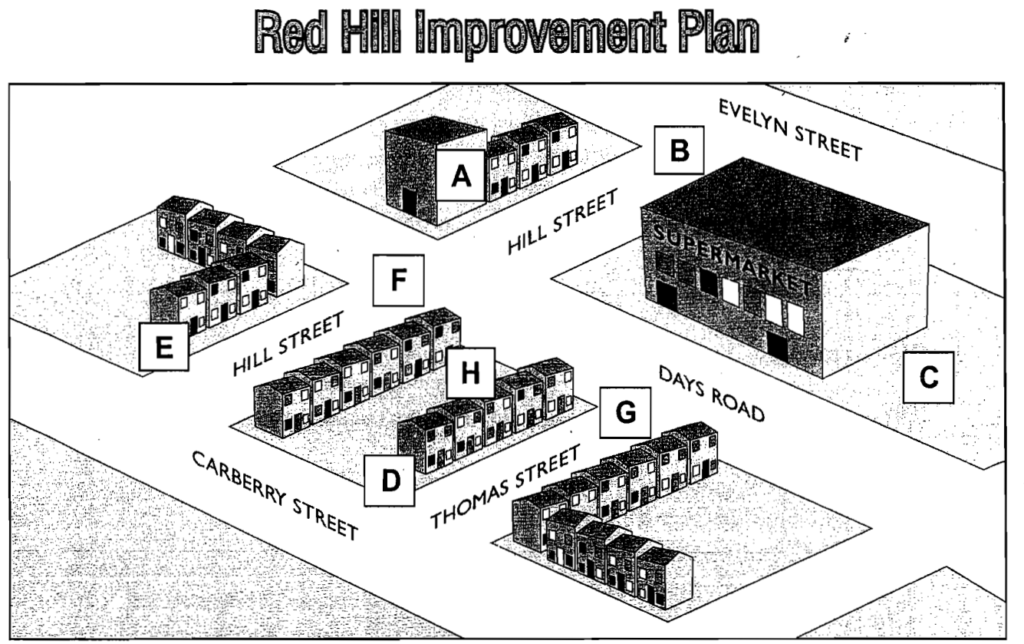
    Improvements to Red Hill Suburb

    1. Community groups are mainly concerned about
      1. pedestrian safety
      2. traffic jams
      3. increased pollution
    2. It has been decided that the overhead power lines will be
      1. extended
      2. buried
      3. repaired
    3. The expenses related to the power lines will be paid by
      1. the council
      2. the power company
      3. local businesses
    Questions 14-20

    Label the map below.

    Write the correct letter A-H next to questions 14-20.

    Red Hill Improvement Plan
    1. Trees
    2. Wider footpaths
    3. Coloured road surface
    4. New sign
    5. Traffic lights
    6. Artwork
    7. Children’s playground

    Part 3: Questions 21 and 22

    Choose TWO letters A-E.

    In which TWO ways is Dan financing his course?

    1. He is receiving money from the government
    2. His family are willing to help him
    3. The college is giving him a small grant
    4. His local council is supporting him for a limited period
    5. A former employer is providing partial funding
    Questions 23 and 24

    Choose TWO letters, A-E.

    Which TWO reasons does Jeannie give for deciding to leave some college clubs?

    1. She is not sufficiently challenged
    2. The activity interferes with her studies
    3. She does not have enough time
    4. The activity is too demanding physically
    5. She does not think she is any good at the activity
    Questions 25 and 26

    Choose the correct letter, A, B or C.

    1. What does Dan say about the seminars on the course?
      1. The other students do not give him a chance to speak
      2. The seminars make him feel inferior to the other students
      3. The preparation for seminars takes too much time
    2. What does Jeannie say about the tutorials on the course?
      1. They are an inefficient way of providing guidance
      2. They are more challenging than she had expected
      3. They are helping her to develop her study skills
    Questions 27-30

    Complete the flow chart below.

    Write NO MORE THAN TWO WORDS OR A NUMBER.

    Advice on exam preparation
    Make sure you know the exam requirements
    Find some past papers
    Work out your (27)………………..for revision and write them on a card
    Make a (28)……………….and keep it in view
    Divide revision into (29)…………….about each topic
    Write one (30)…………….about each topic
    Practice writing some exam answers

    Part 4: Questions 31-36

    Australian Aboriginal Rock Paintings

    Which painting styles have the following features?

    Write the correct letter A, B or C next to questions 31-36.

    Features

    1. figures revealing bones
    2. rounded figures
    3. figures with parts missing
    4. figures smaller than life size
    5. sea creatures
    6. plants

    Painting Styles

    1. Dynamic
    2. Yam
    3. Modern
    Questions 37-40

    Complete the notes below.

    Write NO MORE THAN TWO WORDS.

    RAINBOW SERPENT PROJECT

    Aim of project: to identify the (37) …………………… used as the basis for the Rainbow Serpent
    Yam Period:
    • Environmental changes led to higher (38) ……………………
    • Traditional activities were affected especially (39) ……………………

    Rainbow Serpent Image
    • Similar to a sea horse
    • Unusual because it appeared in inland areas
    • Symbolises (40) …………………… in Aboriginal culture

    Section 1 Answers Cambridge 8 Listening Test 4
    1. waiters
    2. day off
    3. break
    4. meal
    5. dark (colored)
    6. jacket
    7. 28 June
    8. Urwin
    9. noon
    10. reference
    Section 2 Answers Cambridge 8 Listening Test 4
    1. A
    2. B
    3. B
    4. C
    5. D
    6. G
    7. B
    8. F
    9. A
    10. E
    Section 3 Answers Cambridge 8 Listening Test 4
    1. B
    2. E
    3. A
    4. C
    5. B
    6. C
    7. priorities
    8. timetable
    9. (small) tasks
    10. (single) paragraph
    Section 4 Answers Cambridge 8 Listening Test 4
    1. C
    2. B
    3. C
    4. A
    5. B
    6. B
    7. animal
    8. sea level
    9. hunting
    10. creation
  • Cambridge IELTS 8 Listening Test 3

    Part 1: Questions 1-3

    Complete the form below.

    Write ONE WORD OR A NUMBER.

    Rented Properties Customer’s Requirements
    Name: Steven Godfrey
    No. of bedrooms: 4
    Preferred location: in the (1) …………………… area of town
    Maximum monthly rent: (2) …………………… £
    Length of let required: (3) ……………………
    Starting: September 1st

    Questions 4-8

    Complete the table below.

    Write ONE WORD OR A NUMBER.

    AddressRoomsMonthly RentProblem
    Oakington Avenueliving/ dining room, separate kithche£ 550no (4)……………
    Mead Streetlarge living room and kitchen, bathroom and a cloakroom£ 580the (5)………….is too large
    Hamilton Roadliving room, kitchen, diner and a (6)………………..£ 550too (7)…………..
    Devon Closeliving room, dining room, small kitchen(8) £…………..none
    Questions 9 and 10

    Choose TWO letters, A-E.

    Which TWO facilities in the district of Devon Close are open to the public at the moment?

    1. museum
    2. concert hall
    3. cinema
    4. sports centre
    5. swimming pool

    Part 2: Questions 11-16

    Complete the notes below.

    Write NO MORE THAN TWO WORDS OR A NUMBER.

    THE NATIONAL ARTS CENTER
    Well known for: (11) …………………..
    Complex consists of: concert rooms, theatres, cinemas, art galleries, public library, restaurants and
    a (12) …………………..
    Historical background: 1940-area destroyed by bombs
    1960s-1970s – centre was (13)………………….. and built in (14) …………………..– opened to public
    Managed by: the (15)…………………..
    Open: (16)………………….. days per year

    Questions 17-20

    Complete the table below.

    Write NO MORE THAN THREE WORDS OR A NUMBER.

    DayTimeEventVenueTicket price
    Monday and Tuesday7.30 pmThe Magic Flute(17)………..from £ 8
    Wednesday8.00 pm(18)……………(Canadian Film)Cinema 2(19) £………..
    Saturday and Sunday11 am to 10 pm(20)…………..(art exhibition)Gallery 1free

    Part 3: Questions 21-26

    Choose the correct letter A, B or C.

    Latin American Studies

    1. Paul decided to get work experience in South America because he wanted
      1. to teach English there
      2. to improve his Spanish
      3. to learn about Latin American life
    2. What project work did Paul originally intend to get involved in?
      1. construction
      2. agriculture
      3. tourism
    3. 23 Why did Paul change from one project to another?
      1. His first job was not well organized
      2. He found doing the routine work very boring
      3. The work was too physically demanding
    4. In the village community, he learnt how important it was to
      1. respect family life
      2. develop trust
      3. use money wisely
    5. What does Paul say about his project manager?
      1. He let Paul do most of the work
      2. His plans were too ambitious
      3. He was very supportive of Paul
    6. Paul was surprised to be given
      1. a computer to use
      2. so little money to live on
      3. an extension to his contract

    Questions 27-30

    What does Paul decide about each of the following modules?

    Write the correct letter A, B or C next to questions 27-30.

    Module
    27. Gender studies in Latin America
    28. Second language acquisition
    29. Indigenous women’s lives
    30. Portuguese language studies

    A He will do this.
    B He might do this.
    C He won’t do this.

    Part 4: Questions 31-34

    Choose the correct letter A, B or C.

    Trying to repeat success

    1. Compared to introducing new business processes, attempts to copy existing processes are
      1. more attractive
      2. more frequent
      3. more straightforward
    2. Most research into the repetition of success in business has
      1. been done outside the United States
      2. produced consistent findings
      3. related to only a few contexts
    3. What does the speaker say about consulting experts?
      1. Too few managers ever do it
      2. It can be useful in certain circumstances
      3. Experts are sometimes unwilling to give advice
    4. An expert’s knowledge about a business system may be incomplete because
      1. some details are difficult for workers to explain
      2. workers choose not to mention certain details
      3. details are sometimes altered by workers
    Questions 35-40

    Complete the notes below.

    Write ONE WORD ONLY.

    Setting up systems based on an existing process
    Two mistakes:
    Manager tries to:
    • Improve on the original process
    • Create an ideal (35) ………………….. from the best parts of several processes

    Cause of problems
    • Information was inaccurate
    • Comparison between the business settings was invalid
    • Disadvantages were overlooked e.g. effect of changes on (36) …………………..

    Solution
    • Change (37) …………………..
    • Impose rigorous (38) …………………..
    • Copy original very closely:
    o Physical features of the (39) …………………..
    o The (40) ………………….. of original employees

    1. central
    2. 600
    3. 2 years
    4. garage
    5. garden
    6. study
    7. noisy
    8. 595
    9. B
    10. E

    1. classical music concerts
    2. bookshop
    3. planned
    4. 1983
    5. city council
    6. 363
    7. garden hall
    8. three lives
    9. 4.50
    10. faces of china

    1. C
    2. C
    3. A
    4. B
    5. C
    6. A
    7. C
    8. A
    9. B
    10. C

    1. B
    2. B
    3. B
    4. A
    5. combination
    6. safety
    7. attitudes
    8. controls
    9. factories
    10. skills
  • Cambridge IELTS 8 Listening Test 2 Total Insurance Incident Report

    Section 1: Questions 1-10

    Questions 1-3
    Complete the form below.

    Write NO MORE THAN THREE WORDS OR A NUMBER.

    TOTAL INSURANCE INCIDENT REPORT

    Name: Michael Alexander
    Address: 24 Mainly Street, (1) ……………………………, Sydney
    Shipping agent: (2)……………………………..
    Place of origin: China
    Date of arrival: (3)……………………………….
    Reference number: 601ACK
    Questions 4-10
    Complete the table below.
    Write ONE WORD OR A NUMBER.
    ItemDamageCost to repair/ replace
    Televisionthe (4)…………….needs to be replacednot known
    The (5)…………..cabinetthe (6)…………..of the cabinet is damaged(7) $……………
    Dining room tablea (8)……………..is split$ 200
    Set of chinasix (9)…………….were brokenabout (10) $……………in total

    Part 2: Question 11-20
    Choose the correct letter A, B or C.

    1. According to the speaker, the main purposes of the park are
      1. education and entertainment
      2. research and education
      3. research and entertainment

    Questions 12-14
    Label the plan below.

    Write NO MORE THAN WORDS.

    (12)……………………………………
    (13)……………………………………
    (14)……………………………………

    Questions 15-20
    Choose the correct letter A, B or C.

    1. When are the experimental areas closed to the public?
      1. all the year round
      2. almost all the year
      3. a short time every year16.
    2. How can you move around the park?
      1. by tram, walking or bicycle
      2. by solar car or bicycle
      3. by bicycle, walking or bus
    3. The rare breed animals kept in the park include
      1. hens and horses
      2. goats and cows
      3. goats and hens
    4. What is the main purpose of having the Rare Breeds Section?
      1. to save unusual animals
      2. to keep a variety of breeds
      3. to educate the public
    5. What can you see in the park at the present time?
      1. the arrival of wild birds
      2. fruit tree blossom
      3. a demonstration of fishing
    6. The shop contains books about
      1. animals
      2. local traditions
      3. the history of the park

    Part 3: Questions 21-30
    Choose the correct letter A, B or C.

    Questions 21-24

    Honey Bees in Australia

    1. Where in Australia have Asian honey bees been found in the past?
      1. Queensland
      2. New South Wales
      3. several states
    2. A problem with Asian honey bees is that they
      1. attack native bees
      2. carry parasites
      3. damage crops
    3. What point is made about Australian bees?
      1. Their honey varies in quality
      2. Their size stops them from pollinating some flowers
      3. They are sold to customers abroad
    4. Grant Freeman says that if Asian honey bees got into Australia,
      1. the country’s economy would be affected
      2. they could be used in the study of allergies
      3. certain areas of agriculture would benefit

    Questions 25-30
    Complete the summary below. Write ONE WORD ONLY.

    LOOKING FOR ASIAN HONEY BEES


    Birds called Rainbow Bee Eaters eat only (25) ……………………………….and cough up small bits of skeleton and other products in a pellet.
    Researchers go to the locations the bee eaters like to use for (26) ……………………………….
    They collect the pellets and take them to a (27) ………………………………. for analysis.
    Here (28) ………………………………. is used to soften them, and the researchers look for the (29) ………………………………. of Asian bees in the pellets.
    The benefit of this research is that the result is more (30) ………………………………. than searching for live Asian bees.

    Section 4: Questions 31-40

    Questions 31-36
    Choose the correct letter A, B or C..

    Research on questions about doctors
    31. In order to set up her research programme, Shona got
    A advice from personal friends in other countries
    B help from students in- other countries
    C information from her tutor’s contacts in other countries

    32. What types of people were included in the research?
    A young people in their first job
    B men who were working
    C women who were unemployed

    33. Shona says that in her questionnaire her aim was
    A to get a wide range of data
    B to limit people’s responses
    C to guide people through interviews.

    34. What do Shona’s initial results show about medical services in Britain?
    A Current concerns are misrepresented by the press
    B Financial issues are critical to the government
    C Reforms within hospitals have been unsuccessful

    35. Shona needs to do further research in order to
    A present the government with her findings
    B decide the level of extra funding needed
    C identify the preferences of the public

    36. Shona has learnt from the research project that
    A it is important to plan projects carefully
    B people do not like answering questions
    C colleagues do not always agree

    Questions 37-40
    Which statement applies to each of the following people who were interviewed by Shona?

    Choose FOUR answers from the box and write the correct letter, A-F, next to questions 37-40.

    A gave false dataB decided to stop participatingC refusal to tell Shona about their job
    D kept changing their mind about participatingE became very angry with ShonaF was worried about confidentiality

    People interviewed by Shona

    37. a person interviewed in the street…………..

    38. an undergraduate at the university…………..

    39. a colleague in her department…………..

    40. a tutor in a foreign university

    (37)                  (38)
    (39)                  (40)

    1. milperra
    2. first class movers
    3. 28 november
    4. screen
    5. bathroom
    6. door
    7. 140
    8. leg
    9. plates
    10. 60

    1. B
    2. forest
    3. fish farms
    4. market garden
    5. C
    6. A
    7. C
    8. B
    9. C
    10. A

    1. A
    2. B
    3. C
    4. A
    5. insects
    6. feeding
    7. laboratory
    8. water
    9. wings
    10. reliable

    1. B
    2. B
    3. A
    4. A
    5. C
    6. C
    7. B
    8. F
    9. D
    10. C
  • Cambridge IELTS 8 Listening Test 1 George O’Neill In The Library

    Section 1Questions 1 – 10

    Questions 1 and 2

    Choose the correct letter A, B or C

    Example

    • In the library George found
      1. a book
      2. a brochure
      3. a newspaper
    1. In the lobby of the library George saw
      1. a group playing music
      2. a display of instruments
      3. a video about the festival
    1. George wants to sit at the back so they can
      1. see well
      2. hear clearly
      3. pay less
    Questions 3-10

    Complete the form below.

    Write NO MORE THAN TWO WORDS AND / OR A NUMBER for each answer.

    SUMMER MUSIC FESTIVAL BOOKING FORM
    NAME:                            George O’Neill
    ADDRESS:                     3 …………………. , West sea
    POSTCODE:                  4 …………………..
    TELEPHONE:               5 ………………….
    DateEventPrice per ticketNo. Of tickets
    5 June  Instumental group   – Guitarrini£7.502
    17 June  Singer (price includes   6 …………………. in the garden)£62
    22 June    7 ……………………. (Anna Ventura)£7.001
    23 June    Spanish Dance & Guitar Concert8 £ …………………9 ……………………
    NB Children / Student / Senior Citizens have 10 …………………discount on all tickets.
    Cambridge IELTS 8 Test 1 Hi, George! Glad you’re back. Loads of people have phoned you.

    ٍSection 2 – Questions 11-20

    Questions 11-15

    Complete the sentences below.

    Write NO MORE THAN TWO WORDS OR A NUMBER.

    THE DINOSAUR MUSEUM

    1. The museum closes at  p.m. on Mondays.
    2. The museum is not open on
    3. School groups are met by tour guides in the
    4. The whole visit takes 90 minutes, including  minutes for the guided tour.
    5. There are  behind the museum where students can have lunch.
    Questions 16-18

    Choose THREE letter A-G.

    Which THREE things can students have with them in the museum?

    1. food
    2. water
    3. cameras
    4. books
    5. bags
    6. pens
    7. worksheets
    Questions 19 and 20

    Choose TWO letters A-E.

    Which TWO activities can students do after the tour at present?

    1. build model dinosaurs
    2. watch films
    3. draw dinosaurs
    4. find dinosaur eggs
    5. play computer games

    ٍSection 2 – Questions 21-30

    Questions 21-26

    Choose the correct letter A, B or C.

    Field Trip Proposal

    1. The tutor thinks that Sandra’s proposal
      1. should be re-ordered in some parts
      2. needs a contents page
      3. ought to include more information
    2. The proposal would be easier to follow if Sandra
      1. inserted subheadings
      2. used more paragraphs
      3. shortened her sentences
    3. What was the problem with the formatting on Sandra’s proposal?
      1. Separate points were not clearly identified
      2. The headings were not always clear
      3. Page numbering was not used in an appropriate way
    4. Sandra became interested in visiting the Navajo National Park through
      1. articles she read
      2. movies she saw as a child
      3. photographs she found on the internet
    Questions 25-27

    Choose THREE letters A-G

    Which THREE topics does Sandra agree to include in the proposal?

    1. climate change
    2. field trip activities
    3. geographical features
    4. impact of tourism
    5. myths and legends
    6. plant and animal life G social history
    Questions 28-30

    Complete the sentences below.

    Write ONE WORD OR A NUMBER.

    1. The tribal park covers  hectares.
    2. Sandra suggests that they share the  for transport.
    3. She says they could also explore the local

    Section 4: Questions 31-40

    Complete the notes below.

    Write ONE WORD ONLY.

    GEOGRAPHY

    Studying geography helps us to understand:

    • The effects of different processes on the (31)……………………………..of the Earth
    • The dynamic between (32)……………………………..and population

    Two main branches of study:

    • Physical features
    • Human lifestyles and their (33) ……………………………..

    Specific study areas:

    • Biophysical, topographic, political, social, economic, historical and (34)……………………………..  geography and also cartography

    Key point:

    • Geography helps us to understand our surroundings and the associated (35)……………………………..

    What do the geographers do?

    • Find data e.g. conduct censuses, collect information in the form of (36)……………………………..  using computer and satellite technology
    • Analyse data – identify (37)……………………………..  e.g. cause and effect
    • Publish findings in the form of:

    Maps

    • Can show physical features of large and small areas
    • But a two-dimensional map will always have some (38)……………………………..

    Aerial photos

    • Can show vegetation problems (39)……………………………..  density, ocean, floor etc.

    Landsat pictures sent to receiving stations
    • Used for monitoring (40)……………………………..  conditions etc.

    Section 1 Answers Cambridge 8 Listening Test 1 George O’Neill
    1. C
    2. B
    3. 48 north avenue
    4. WS62YH
    5. 01674553242
    6. drinks/ refreshments
    7. pianist/ piano player
    8. 10.50
    9. 4
    10. 50%
    Section 2 Answers Cambridge 8 Listening Test 1 THE DINOSAUR MUSEUM
    1. 1.30
    2. 25 December
    3. car parking
    4. 45
    5. tables
    6. C
    7. F
    8. G
    9. B
    10. E
    Section 3 Answers Cambridge 8 Listening Test 1 Field Trip Proposal
    1. A
    2. C
    3. A
    4. B
    5. B
    6. C
    7. F
    8. 12,000
    9. horses
    10. caves
    Section 4 Answers Cambridge 8 Listening Test 1 Geography
    1. surface
    2. environment
    3. impact/ effects
    4. urban
    5. problems
    6. images
    7. patterns
    8. distortion
    9. traffic
    10. weather
  • Cambridge IELTS 8 General Reading Test 2

    Section 1

    Consumer advice on buying shoes

    If you have a problem with shoes you’ve recently bought follow this four-step plan.

    Step 1
    Go back to the shop with proof of purchase. If you return faulty shoes at once, you have a right to insist on a refund. It is also likely that you will get one if you change your mind about the shoes and take them back immediately. But if you delay or you’ve had some use out of the shoes, the shop may not give you all your money back. It depends on the state of the shoes and how long you’ve had them.

    If you are offered a credit note, you don’t have to accept it. If you accept it you will usually not be able to exchange it for cash later on. So, you may be left with an unwanted credit note, if you cannot find any other shoes you want from the shop.

    The shop may want to send the shoes back to head office for inspection. This is fair and could help to sort things out But don’t be put off by the shop which claims that it’s the manufacturer’s responsibility. This isn’t true. Its the shop’s legal duty to put things right.

    Step 2
    If you don’t seem to be getting anywhere, you can get help. Free advice is available from a Citizens Advice Bureau (get the address from your telephone book), or from a local Trading Standards Department. Again, consult the telephone directory under County, Regional or Borough Council. All these departments have people who can advise you about faulty goods and what to do with them.

    Step 3
    Most shops are covered by the Footwear Code of Practice. If the shop you are dealing with is covered, you can ask for the shoes to be sent to the Footwear Testing Centre for an independent opinion. The shop has to agree with whatever the resulting report says. There is a charge of £21. You pay £7 and the shop pays the rest (including postage).

    Step 4
    As a last resort you can take your case to court. This is not as difficult as it sounds. The small claims procedure for amounts up to £ 1000 (£750 in Scotland) is a cheap,easy and informal way of taking legal action.

    The relevant forms are available from your nearest County Court or, in Scotland, the Sheriff Court. You can get advice and leaflets from the Citizens Advice Bureau. Alternatively, some bookshops sell advice packs which contain the relevant forms.

    Questions 1-8

    Do the following statements agree with the information given in the text?

    In boxes 1-8 on your answer sheet, write

    • TRUE                       if the statement agrees with the information
    • FALSE                     if the statement contradicts the information
    • NOT GIVEN          if there is no information on this in the passage
    1. If you return unwanted shoes straightaway, with a receipt, the shop will probably give you a refund.
    2. You are advised to accept a credit note if you are offered one.
    3. The factory is responsible for replacing unwanted shoes.
    4. You can ask any shoe shop to send shoes to the Footwear Testing Centre.
    5. Shops prefer to give a credit note rather than change shoes.
    6. The customer contributes to the cost of having faulty shoes tested.
    7. The procedure for making a legal claim is easier in Scotland.
    8. Legal advice and forms can be bought from certain shops.

    Read the text below and answer Questions 9-14

    LOST CARDS

    If you discover that your credit card, cheque book, debit card or cash card’s missing, telephone the credit card company or bank as soon as possible. Follow this up with a letter. If you suspect theft tell the police as well.

    In most circumstances, provided you act quickly, you will not have to pay any bills which a thief runs up on your account. Most home insurance policies will also cover you against even this limited risk.

    Because plastic money’s now so common, central registration schemes such as Credit Card Shield and Card Protection System exist to help customers whose cards are lost or stolen. Under the schemes you file details of all your cards- including cash cards and account cards issued by hops-with a central registry, for a small annual fee. Then, if any or all of your cards are stolen, you need to make only one phone call to the registry, which is open around the clock 365 days a year. As soon as you have called, your responsibility for any bills run up by the thief ends and the scheme’s staff make sure that all the companies whose cards you had are notified

    What you stand to lose on a stolen card
    CREDIT CARD You will not have to pay more than £50 of the bills a thief runs up with your card. If you report the loss before the card’s used, you will not have to pay anything.

    CHEQUES AND GUARANTEE CARD Unless you have been careless- by signing blank cheques, you will not have to pay for any forged cheques a thief uses. The bank or shop that accepts them will have to bear the loss.

    DEBIT CARD (Switch or Visa Delta) The banks operate a system similar to that for credit cards, in that you are liable for bills up to £50. If your cash card is stolen legally, you can be made to pay back any sums a thief withdraws using your card, but only up to the time you report the loss and up to £50, unless the bank can prove gross negligence, such as writing your personal identification number on your card.

    • Never keep your card and a note of your personal number (which does not appear on the card) together.
    • Memorise your personal number if possible. If you must make a note of it disguise it as something else-a telephone number, say.
    • The same rules and precautions apply to a credit card used as a cash card.

    Questions 9-14

    Choose the correct letter, A. B, C or D.

    Write the correct letter in boxes 9-14 on your answer sheet.

    1. What should you do first if you lose a credit card?
      1. contact your insurance company
      2. write a letter
      3. contact the police
      4. make a phone call
    2. Credit Card Shield is
      1. an insurance company which deals with card theft.
      2. a system for registering people’s card details.
      3. an emergency telephone answering service.
      4. an agency for finding lost or stolen cards
    3. When contacted, the Card Protection System company will
      1. inform the police about the loss of the card.
      2. get in touch with the relevant credit card companies.
      3. ensure that lost cards are replaced.
      4. give details about the loss of the card to shops.
    4. You are fully covered by both banks and shops if you lose
      1. a cheque that is signed but not otherwise completed.
      2. a blank unsigned cheque.
      3. a Switch card.
      4. a credit card.
    5. If you have written your personal number on a stolen card, you may have to
      1. join a different credit card protection scheme.
      2. pay up to £50 for any loss incurred.
      3. pay for anything the thief buys on it.
      4. change your account to a different bank.
    6. What happens if your cash card is stolen?
      1. You arrange for the card to be returned.
      2. The bank stops you withdrawing money.
      3. You may have to pay up to £50 of any stolen money.
      4. You cannot use a cash card in future.

    Read the text and answer Questions 15-21.

    Recycling at work handy hints to employers

    It is estimated that avoidable waste costs UK businesses up to 4.5°/o of their annual revenue. Reducing waste in the workplace is about being efficient. By becoming more efficient, businesses not only increase profits but they also save natural resources.

    On the island of Jersey, for example, the amount of waste produced each year has doubled since 1980. In 2004 it topped 100,000 tonnes and 60% is generated by local businesses. A lot of waste for a small island!

    Setting up a company scheme

    Waste audit
    Before starting a recycling scheme, perform an audit. This will make you aware of how much waste you are producing in the company.

    Company policy
    Consider switching your office waste contractor to one that provides are cycling service. Buy recycled paper. Although this is sometimes more expensive, costs can be reduced by lowering consumption and using duplex printers.

    Get everyone involved
    • Raise awareness internally within the company, perhaps by putting up educational posters.
    • Allocate a person to be the point of contact for anyone with queries.

    There are also a couple of ways to increase motivation:
    • Hold internal competitions between different departments. For example, see which can reduce their waste the most within a specific time period.
    • Send out regular newsletters reporting on all waste improvements. Staff will then see the impact their actions are having.

    WHAT TO RECYCLE AND HOW

    Paper
    According to a recent survey 65% of waste produced is paper waste. Waste paper will inevitably be produced in
    the workplace but it is not necessary to discard it. It can serve a variety of purposes before it is recycled such as writing notes. Envelopes too can be re-used for internal mail.

    Plastic cups
    Rather than supplying disposable plastic cups in your workplace get ceramic mugs that can be re-used. Not only do they make your tea taste better but they can reduce your office waste by up to 1%!

    Electrical equipment
    Rather than giving up on any old electrical equipment and just throwing it away why not try upgrading it? This reduces waste as well as avoiding the need to manufacture a new machine -a process which creates a large amount of waste. You could also consider donating your old computers to charities when it comes to replacing them.

    Questions 15-21

    Answer the questions below.

    Choose NO MORE THAN TWO WORDS from the text for each answer.

    Write your answers in boxes 15-21 on your answer sheet.

    1. What does the writer think should be carried out in a company before it starts recycling?
    2. What machines can help to cut the stationery budget?
    3. What can be displayed in the workplace to publicise the recycling scheme?
    4. What can be distributed to motivate staff to recycle more?
    5. What can unwanted paper be used for in the office?
    6. What can be bought to cut down on the waste produced by staff refreshments?
    7. Where can unwanted PCs be sent?

    Read the text below and answer Questions 22-27

    Recycling at work handy hints to employers

    To start, take a tip from consultants who coach executives on how to handle media interviews. They say you can deliver the message you want to an employer, regardless of the question you’re asked.

    Unlike some politicians, who take no notice of press questions and immediately introduce a different topic in response, job candidates must answer employers queries, says John Barford of the interview training firm Genesis. However, you can quickly make the transition from your answer to the important points you want to convey about your qualifications, he says.

    He advises candidates at job interviews to apply the formula Q= A + 1: Q is the question; A is the answer; + is the bridge to the message you want to deliver; and 1 is the point you want to make.

    Diligent preparation is also necessary to effectively answer any interview question, say senior executives. They give a number of useful tips:

    • Learn as much as you can beforehand. Ask company employees questions prior to job interviews to gain as much insight as you can if the company is publicly owned, find out how viable it is by reading shareholder reports. You can then tailor what you say to the company’s issues.

    • Be prepared for questions that require you to show how you handled difficult challenges. These questions require stories in response, but as it’s unlikely that you’ll have one that fits every situation, try to recall some from your past experience that show how you coped with a range of issues.

    • Count on being asked about a past mistake or blemish on your career record, and don t try to dodge the issue.
    Ms Murphy, president of the Murphy Group, a media interview training firm, says that it’s important to steer clear of lies at all costs. Just answer the question and move on.

    • When discussing a mistake, focus on the positive outcomes. You learn as much by dropping the ball as you do by catching it says senior executive Mr Friedmann. When he was being interviewed for his current job, he mentioned he had been involved in many successful turnarounds and one that failed. ‘And I said how I’d benefited in many ways from going through that experience,’ he says.

    Questions 22-27

    Complete the sentences below.

    Choose NO MORE THAN TWO WORDS from the text for each answer

    Write your answers in boxes 22-27 on your answer sheet.

    1. The writer warns candidates not to imitate the way that ________ ignore questions in interviews.
    2. Interviewees are recommended to follow a certain ________ to allow them to communicate their main points.
    3. Senior executives advise candidates to request information from ________ before an interview.
    4. A candidate can also learn about a business by studying its ________.
    5. The head of an interview training firm advises people to avoid telling ________.
    6. In his job interview, one executive explained how he had ________ considerably from a previous failure.

    Read the text below and answer Questions 28-40

    Section 3

    TALKING POINT

    Learning a second language fuels children’s intelligence and makes their job prospects brighter. But the fact is, in New Zealand, as in many other English-speaking countries, speakers of two or more languages are in the minority. Eighty-four per cent of New Zealanders are monolingual (speakers of only one language). This leaves a small number who claim to speak two or more languages-a small percentage of whom were born in New Zealand.

    No matter how proud people are of their cultural roots, to speak anything other than English is a marker of difference here. That’s why eight-year-old Tiffany Dvorak no longer wishes to speak her mother tongue German, and eight-year-old Ani Powell is embarrassed when people comment on the fact that she is able to speak Maori*. As Joanne Powell, Ani mother, points out: In Europe, it’s not unusual for kids to be bilingual. But, if you speak another language to your children in New Zealand, there are some people who think that you are not helping them to become a member of society.

    But in fact, the general agreement among experts is that learning a second language is good for children. Experts believe that bilinguals – people who speak two languages have a clear learning advantage over their monolingual schoolmates. This depends on how much of each language they can speak, not on which language is used, so it doesn’t matter whether they are learning Maori or German or Chinese or any other language.

    Cathie Elder, a professor of Language Teaching and Learning at Auckland University, says: ‘A lot of studies have shown that children who speak more than one language sometimes learn one language more slowly, but in the end they do as well as their monolingual schoolmates, and often better, in other subjects. The view is that there is an improvement in general intelligence from the effort of learning another language.’

    Dr Brigitte Halford, a professor of linguistics at Freiburg University in Germany, agrees. Bilinguals tend to use language better as a whole, she says. They also display greater creativity and problem-solving ability, and they learn further languages more easily. So with all of the benefits, why do we not show more enthusiasm for learning other languages? Parents and teachers involved in bilingual education say pressure from friends at school, general attitudes to other languages in English-speaking countries, and problems in the school system are to blame.

    In New Zealand, immigrants face the possibility of culture being lost along with the language their children no longer wish to speak. Tiffany’s mother, Susanne Dvorak, has experienced this. When she and husband Dieter left Germany six years ago to start up a new life in New Zealand, they thought it would be the perfect opportunity to raise their two-year-old as a bilingual. After all, bilingual Turkish families in Germany were normal and Susanne had read all the books she could find on the subject.

    The idea was to have as a German language environment and for Tiffany to learn English at nursery school. But when Tiffany went to nursery school she stopped talking completely. She was quiet for about two or three months. Then, when she took up talking again, it was only in English. Concerned for her language development, Dieter started speaking English to his daughter while Susanne continued in German.

    Today, when Susanne speaks to her daughter in German, she still answers in English.‘Or sometimes she speaks half and half. I checked with her teacher and she very seldom mixes up German and English at school. She speaks English like a New Zealander. It’s her German that’s behind,’ says Susanne.

    Professor Halford, also a mother of two bilingual children, says, ‘It’s normal for kids to refuse to speak their home language at the stage when they start to socialise with other kids in kindergarten or school’. But, she says, this depends a lot on the attitudes of the societies in question. In monolingual societies, like New Zealand, ‘kids want to be like all the others and sometimes use bilingualism as one of the battlefields for finding their own identity in contrast to that of their parents.’

    She supports Susanne’s approach of not pressuring her daughter. ‘Never force the child to use a specific language, just keep using it yourself. The child will accept that. There is often a time when children or teenagers will need to establish their own identity as different from their schoolmates and they may use their other language to do so.’

    Cathie Elder thinks immigrant parents should only speak English to their children if they are able to use English well themselves. ‘What parents should do is provide rich language experiences for their children in whatever language they speak well. They may feel like outsiders and want to speak the local language, but it is more important for the child’s language development to provide a lot of language experience in any language.’

    There can be differences between children in attitudes to learning languages. Susanne Dvorak’s two-year-old son, Danyon, is already showing signs of speaking German and English equally well. While her ‘ideal’ scenario hasn’t happened with Tiffany, she is aware that her daughter has a certain bilingual ability which, although mainly passive at this stage, may develop later on.

    Joanne Powell feels the same way about her daughter, Ani. ‘At the moment she may not want to speak Maori but that’s okay because she’ll pick it up again in her own time. It’s more important that she has the ability to understand who she is. By learning another language she can open the door to another culture.’

    Donna Chan, 25, a marketing specialist for IBM, arrived here with her parents from Hong Kong when she was four. She also remembers refusing to speak Chinese when she started primary school. But now she appreciates she had the chance to be bilingual. ‘It’s quite beneficial speaking another language in my job. Last year, my company sent me to a trade fair in Hong Kong because I could speak Chinese. Being bilingual definitely opens doors,’ she says

    Questions 28-31

    Do the following statements agree with the information given in the text?

    In boxes 28-31 on your answer sheet, write

    • TRUE                      if the statement agrees with the information
    • FALSE                    if the statement contradicts the information
    • NOT GIVEN         if there is no information on this in the passage
    1. Most people who speak a second language in New Zealand were born in another country.
    2. Most New Zealanders believe it is good lo teach children a second language.
    3. Chinese is the most common foreign language in New Zealand.
    4. Some languages develop your intelligence more than others.
    Questions 32-38

    Look at the following statements (Questions 32-38) and the list of people below.

    Match each statement with the correct person, A-E. Write the correct letter, A-E, in boxes 32-38 on your answer sheet.

    NB You may use any letter more than once.

    1. Cathie Elder
    2. Brigitte Halford
    3. Susanne Dvorak
    4. Joanne Powell
    5. Donna Chan
    1. Children learning two languages may learn one language faster.
    2. It has been unexpectedly difficult to raise a bilingual child in New Zealand.
    3. Her daughter sometimes speaks a mixture of two languages.
    4. Children’s attitudes to language depend on general social attitudes.
    5. It is not important which language parents speak with their children.
    6. Learning a second language provides opportunities to learn another culture
    7. Speaking a second language provides work opportunities.
    Question 39

    Choose TWO letters, A-F.

    Write the correct letters in box 39 on your answer sheet.

    Which TWO people stopped speaking one language as a child?

    1. Donna Chan
    2. Susanne Dvorak
    3. Tiffany Dvorak
    4. Cathie Elder
    5. Brigitte Halford
    6. Joanne Powell
    Question 40

    Choose TWO letters, A-F.

    Write the correct letters in box 40 on your answer sheet.

    Which TWO people think that their children’s language may develop as they get older?

    1. Donna Chan
    2. Susanne Dvorak
    3. Tiffany Dvorak
    4. Cathie Elder
    5. Brigitte Halford
    6. Joanne Powell
    Section 1 Consumer advice on buying shoes Questions 1-8 General Reading Answers
    1. TRUE
    2. FALSE
    3. FALSE
    4. FALSE
    5. NOT GIVEN
    6. TRUE
    7. NOT GIVEN
    8. TRUE
    Section 1 LOST CARDS Questions 9-14 General Reading Answers
    1. D
    2. B
    3. B
    4. B
    5. C
    6. C
    Section 2 Recycling at work handy hints to employers Questions 15-21 General Reading Answers
    1. (an) audit/(waste) audit
    2. (duplex) printers
    3. (educational) posters
    4. (regular) newsletters
    5. (writing) notes
    6. (ceramic) mugs
    7. (to) charities
    Section 2 Recycling at work handy hints to employers Questions 22-27 General Reading Answers
    1. (some) politicians
    2. formula
    3. (company) employees
    4. shareholder reports
    5. lies
    6. benefited/benefitted
    Section 3 TALKING POINT Questions 28-40 General Reading Answers
    1. TRUE
    2. NOT GIVEN
    3. NOT GIVEN
    4. FALSE
    5. A
    6. C
    7. C
    8. B
    9. A
    10. D
    11. E
    12. A,C
    13. B,F
  • Cambridge IELTS 8 General Reading Test 1

    Holiday Plus

    HOLIDAY PLUS
    Need a break? Choose from these three wonderful holidays.
    Holiday LocationPrice *Number of nightsDaily meals
    included in
    Package
    CommentsTransport to/
    from airport
    AMountain Lodge

    a unique wilderness
    retreat on the edge
    of the World Heritage-
    listed National Park
    and only 5 km from
    the sea
    $330mountain buffet
    breakfast
    plus
    free soft drinks
    always available
    free canoeing

    free talks in the
    evening

    free open-air
    tennis courts

    horse-riding
    optional extra
    self-drive auto
    1 hour 15 minutes
    or bus three
    times/week
    approx. 2 hours
    BPelican Resort

    a true coral island right on
    The Great Barrier Reef

    swim straight from the beach
    $5804hot breakfast Plus
    beach picnic lunch
    plus set
    4-course dinner
    refurbishment:
    resort will close
    for May

    free minibus trips
    around island

    Plane flights to
    Wilson island
    only $50
    1/2 hour by
    minibus
    CCore Lege$7404tropical breakfast

    picnic lunch –
    optional extra
    Oldest living rainforest

    free bikes and tennis courts;
    horse riding
    extra
    10 mins by taxi
    * Price: per person, per package, twin share Holiday Plus IELTS Reading
    Questions 1–3

    Look at the three holidays, A, B and C in above text.

    For which holiday are the following statements true?

    Write correct letter, A, B or C, in boxes 1-3 on your answer sheet.

    1. This holiday doesn’t cater for young children.
    2. This holiday provides a tour at no extra cost.
    3. This holiday involves most travel time from the airport.
    Questions 4–6

    Answer the questions below.

    Choose NO MORE THAN THREE WORDS from the text for each answer.

    Write your answer in boxes 4-6 on your answer sheet.

    1. When will one of the holiday locations not be open?
    2. Which two outdoor activities are provided at no extra cost at Mountain Lodge?
    3. What is the fastest way to travel to Mountain Lodge?

    SYDNEY TRAVEL COLLEGE

    At this College, we recommend the Multiplan policy.

    Travel insurance requirements
    As this course includes a total of three months’ travel outside Australia, travel insurance is compulsory. If you are sick or have an accident in Australia, your medical bills will be fully covered – however, you cannot assume that everything will be covered overseas, so please read the following requirements carefully

    1. Medical
    Australia has reciprocal medical arrangements with the governments of the eight nations you will be visiting. This arrangement will cover all emergency hospital   treatment. However, students will have to take out insurance such as Multiplan to cover the costs of all visits to doctors, and other non-emergency medical situations.


    If you have a serious accident or illness, Multiplan insurance will cover the cost of your flight back to Australia, if required. Depending on the circumstances, this may also pay for either medical personnel or a family member to accompany you home. Multiplan insurance may not cover all pre-existing medical conditions – so before you leave be sure to check with them about any long-term illnesses or disabilities that you have.

    If you do require medical treatment overseas, and you want to make a claim on your insurance, the claim will not be accepted unless you produce both your student card and your travel insurance card.

    2. Belongings
    The Multiplan policy covers most student requirements. In particular, it provides students with luggage insurance. This covers any loss or theft of your everyday belongings. For example, this insurance covers:

    • the present value of items that are stolen, provided that you  have purchase receipts for every item; if no receipts, no payment can be made
    • replacement value of your briefcase or backpack and study books
    • portable computers and CD players, if you specifically list them as items in the policy

    3. Cancellation
    This insurance covers any non-refundable deposit and other costs you have paid if you have to cancel due to ‘unforeseen or unforeseeable circumstances outside your control’. It does not provide cover if you change your study or travel plans for other reasons.

    Questions 7–14

    Classify the following events as being

    1. covered by government arrangements
    2. covered by the Multiplan policy
    3. not covered by the Multiplan policy
    4. covered in some situations

    Write the correct letter, A, B, C or D in boxes 7-14 on your answer sheet.

    1. A student travelling overseas suddenly needs hospital treatment.
    2. A student consults a doctor regarding a minor problem while abroad.
    3. A parent goes overseas to bring an injured or sick student to Australia.
    4. A student is treated overseas for an illness he/she had before leaving Australia.
    5. A student who requires medical treatment has lost his/her travel insurance card.
    6. A student’s study books are lost.
    7. A student’s laptop is stolen.
    8. A student changes his/her mind about plans to study and decides not to take the booked flight.

    Section 2

    You should take around 20 minutes to complete this task.

    Kenichi Software: Security Guidelines for Staff

    Read the text below and answers questions 15-27 on your answer sheet.

    General
    It is in everyone’s interest to maintain a high level of security in the workplace. You should immediately challenge any person who appears to be on the premises without proper authorisation, or inform a senior member of staff about any odd or unusual activity.

    Company Property
    You are advised that it is within the company’s legal rights to detain any person on the grounds that they may be involved in the unauthorised removal of company property. The company reserves the right to search staff members leaving or entering the premises and to inspect any article or motor vehicle on company property. It is a condition of employment that you submit to such action if requested.

    It is in your own interest to ensure that you have proper authority before removing any item of company property from a company building. Any member found removing company property from the building without proper authority will be subject to disciplinary action.

    Identity Badges
    You will be issued with an identity badge, which should be worn at all times when you are on company premises. The purpose of  these badges is to safeguard our security. Badges are issued by  Human Resources, and contractors and people visiting the company on a one-off basis are also obliged to wear them.

    Confidential Matters
    In the course of your work, you may have access to information  relating to the company’s business, or that of a supplier or customer. Such material, even where it appears comparatively trivial, can have a serious effect on the company, supplier or customer if it falls into the wrong hands. It is, therefore, essential that you should at all times be aware of the serious view the company would take of disclosure of such material to outsiders.

    You must treat as confidential all information, data, specifications, drawings and all documents relating to the company’s business and/or its trading activities, and not divulge, use, or employ them except in the company’s service. Before you leave the company, you must hand over to your manager all private notes relevant to the company’s business, activities, prices, accounts, costs etc. Legal proceedings may be initiated for any misuse or unauthorized disclosure of such confidential information, whether during employment or afterwards.

    Questions 15–20

    Complete the sentences below.

    Choose NO MORE THAN TWO WORDS from the text for each answer.

    Write your answers in boxes 15-20 on your answer sheet.

    1. If you see anything suspicious, you should report it to a ……………… employee.
    2. If the company wants to stop you and ……………… you, you have to agree to it.
    3. If you take things belonging to the company without permission, you will face ………………
    4. Staff, ………………. and visitors must all wear a badge on company premises.
    5. You must not pass on confidential information to ……………… .
    6. If you leave the company, you have to hand in any ……………… you have made on matters concerning the company.

    Read the text below and answer Questions 21–27.

    Is Everyone Entitled to Paid Holidays?

    The Working Time Regulations (WTRs) introduced a new right to paid holidays for most workers. However, some workers were not covered when the WTRs came into force in October 1998. Since the regulations were amended, with effect from 1 August 2003, the majority of these workers have been entitled to paid holidays, and since 1 August 2004, the regulations have also applied to junior doctors.

    Workers who qualify are entitled to no fewer than four weeks of paid holiday a year, and public holidays (normally eight days in England and Wales) count towards this. However, workers and employers can agree longer holidays.

    For the first year of work, special accrual rules apply. For each month of employment, workers are entitled to one-twelfth of the annual holiday. After the first year of employment, you can take your holiday entitlement at any time, with your employer’s approval.

    Before taking holidays, you must give your employer notice of at least twice the length of the holiday you want to take: for instance, to take a five-day holiday, you must give at least ten days’ notice. If your employer does not want you to take that holiday, they can give you counter-notice equal to the holiday – for example, five days’ notice not to take a five-day holiday.

    If the employer wants you to take holiday at a given time, e.g. when there is a shutdown at the same time every year,’ they must give you notice of at least twice the length of the holiday. There is no right for the worker to take that holiday at a different time.

    Holiday cannot be carried over to the next year, unless your contract of employment allows this to happen. Nor can you be paid in lieu of your holiday. However, when you leave the job, you are entitled to receive payment for any outstanding holiday, provided your contract specifically allows for this.

    It may be that your contract gives you better rights, or your holiday rights might be specified in a collective agreement. Your union representative can advise you on this.

    Questions 21–27

    Choose NO MORE THAN THREE WORDS AND/OR A NUMBER from the text for each answer.

    Write your answers in boxes 21-27 on your answer sheet.

    1. In what year were the regulations extended to cover most of the workers who were originally excluded?
    2. What is the minimum annual paid holiday which workers are entitled to?
    3. During a worker’s first year of employment, what proportion  of their annual holiday does a month’s work give?  
    4. What can an employer give a worker to stop them taking holiday that they have requested?
    5. What is given as a possible reason for an employee having to take a holiday at a certain time?
    6. When an employee leaves their job, what should be given in place of any holiday they have not taken?
    7. Apart from a contract, what type of document may set out an employee’s holiday rights?

    Section 3

    Read the text below and answers questions 28-40 on your answer sheet.

    You should take around 20 minutes to complete this task.

    Snake Oil

    A.   Back in the days of America’s Wild West, when cowboys roamed the range and people were getting themselves caught up in gunfights, a new phrase – ‘snake oil’ – entered the language. It was a dismissive term for the patent medicines, often useless, sold by travelling traders who always claimed miraculous cures for everything from baldness to snakebite.

    Selling ‘snake oil’ was almost as risky a business as cattle stealing; you might be run out of town if your particular medicine, as you realised it would, failed to live up to its claims. Consequently, the smarter – ‘snake oil’ sellers left town before their customers had much chance to evaluate the ‘cure’ they had just bought.

    B.   The remarkable thing about many of the medicines dismissed then as ‘snake oil’ is not so much that they failed to live up to the outrageous claims made for them – those that weren’t harmless coloured water could be positively dangerous. What’s remarkable is that so many of the claims made for some of these remedies, or at least their ingredients, most of them, plant based, have since been found to have at least some basis in fact.

    One, Echinacea, eventually turned out to be far more potent than even its original promoter claimed. Echinacea first appeared in ‘Meyer’s Blood Purifier’, promoted as a cure-all by a Dr H.C.F. Meyer – a lay doctor with no medical qualifications.  ‘Meyer’s Blood Purifier’ claimed not only to cure snakebite, but also to eliminate a host of other ailments.

    C.   Native to North America, the roots of Echinacea, or purple coneflower, had been used by the Plains Indians for all kinds of ailments long before Meyer came along. They applied poultices of it to wounds and stings, used it for teeth and gum disease and made a tea from it to treat everything from colds and measles to arthritis. They even used it for snakebite.

    D.   Settlers quickly picked up on the plant’s usefulness but until Meyer sent samples of his ‘blood purifier’ to John Lloyd, a  pharmacist, it remained a folk remedy. Initially dismissing Meyer’s claims as nonsense, Lloyd was eventually converted after a colleague, John King, tested the herb and successfully used it to treat bee stings and nasal congestion.

    In fact, he went much further in his claims than Meyer ever did and by the 1890s a bottle of tincture(1) of Echinacea could be found in almost every American home, incidentally making a fortune for Lloyd’s company, Lloyd Brothers Pharmacy.  

    E.   As modern antibiotics became available, the use of Echinacea products declined and from the 1940s to the 1970s it was pretty much forgotten in the USA. It was a different story in Europe, where both French and German herbalists and homeopaths continued to make extensive use of it.

    It had been introduced there by Gerhard Madaus, who travelled from Germany to America in 1937, returning with seed to establish commercial plots of Echinacea. His firm conducted extensive research on echinacin, a concentrate they made from the juice of flowering tops of the plants he had brought back. It was put into ointments, liquids for internal and external use, and into products for injections.

    F.   There is no evidence that Echinacea is effective against snakebite, but Dr Meyer – who genuinely believed in Echinacea  – would probably be quite amused if he could come back and see the uses to which modern science has put ‘his’ herb. He might not be surprised that science has confirmed Echinacea’s role as a treatment for wounds, or that it has been found to be helpful in relieving arthritis, both claims Meyer made for the herb.

    He might though be surprised to learn how Echinacea is proving to be an effective weapon against all sorts of disease, particularly infections. German researchers had used it successfully to treat a range of infections and found it to be effective against bacteria and protozoa (2).

    There are many other intriguing medical possibilities for extracts from the herb, but its apparent ability to help with our more common ailments has seen thousands of people become enthusiastic converts. Dozens of packaged products containing extracts of Echinacea can now be found amongst the many herbal remedies and supplements on the shelves of health stores and pharmacies. Many of those might be the modern equivalents of ‘snake oil’, but Echinacea at least does seem to have some practical value.

    G.   Echinacea is a dry prairie plant, drought-resistant and pretty tolerant of most soils, although it does best in good soil with plenty of sun. Plants are usually grown from seed but they are sometimes available from nurseries. Echinacea is a distinctive perennial with erect, hairy, spotted stems up to a meter tall. Flower heads look like daisies, with purple rayed florets and a dark brown central cone. The leaves are hairy; the lower leaves are oval to lance-shaped and coarsely and irregularly toothed.

    H.   There are nine species of Echinacea in all but only three are generally grown for medicinal use. All have similar medicinal properties. Most European studies have used liquid concentrates extracted from the tops of plants, whereas extraction in the USA has usually been from the roots. Today   most manufacturers blend both, sometimes adding flowers and seeds to improve the quality.

    For the home grower, the roots of all species seem equally effective. Dig them up in autumn after the tops have died back after the first frost. Wash and dry them carefully and store them in glass containers. You can harvest the tops throughout the summer and even eat small amounts of leaf straight from the plant.

    Even if you don’t make your fortune from this herb, there are few sights more attractive than a field of purple coneflowers in all their glory. And with a few Echinacea plants nearby, you’ll never go short of a cure.
    ———————————————————-
    (1) a liquid containing a special ingredient
    (2) a type of micro-organism

    Questions 28-33

    The text on following pages has eight sections, A-H.

    Choose the correct heading for sections C-H from the list of headings below.

    Section A and Section B have been done for you.

    Write the correct number, i-xi, in boxes 28-33 on your answer sheet.

    List of Headings

    1. Where to buy the best Echinacea
    2. What ‘snake oil’ contained  
    3. Growing Echinacea
    4. How to use the Echinacea plant
    5. Earlier applications of Echinacea
    6. The origins of the term ‘snake oil’
    7. Early research into the effectiveness of Echinacea
    8. How ‘snake oil’ was first invented
    9. The use of Echinacea in new locations
    10. Modern evidence of the effectiveness of Echinacea
    11. Early kinds of ‘snake oil’

    Examples       Answers

    Section A           vi
    Section B           xi

    1. Section C
    2. Section D
    3. Section E
    4. Section F
    5. Section G
    6. Section H
    Questions 34–40

    Do the following statements agree with the information given in the text?

    In boxes 34-40 on your answer sheet, write:

    • True    if the statement agrees with the information
    • False   if the statement contradicts the information
    • Not given   if there is no information on this
    1. ‘Snake oil’ sellers believed their product was effective.
    2. Most people in the Wild West mistrusted ‘snake oil’.
    3. Some ‘snake oils’ were mostly water.
    4. All ‘snake oils’ contained Echinacea.
    5. Echinacea has been proven to kill microbes.
    6. The highest quality Echinacea is grown in America.
    7. More than one part of the Echinacea plant has a medicinal use.
    Section 1 Holiday Plus Questions 1-6 General Reading Answers
    1. C
    2. B
    3. A
    4. (for/in) May
    5. canoeing (and) tennis [in either order; both required for one mark]
    6. (by) (self-drive) auto (mobile)
    Section 1 SYDNEY TRAVEL COLLEGE Questions 7-14 General Reading Answers
    1. A
    2. B
    3. D
    4. D
    5. C
    6. B
    7. D
    8. C
    Section 2 Kenichi Software: Security Guidelines for Staff Questions 15-20 General Reading Answers
    1. senior
    2. (to) search
    3. disciplinary action
    4. contractors
    5. outsiders
    6. (private) notes
    7. (in) 2003
    Section 2 Is Everyone Entitled to Paid Holidays? Questions 21-27 General Reading Answers
    1. (in) 2003
    2. 4 weeks (a year)
    3. one twelfth// one-twelfth (of annual holiday(s))
    4. (equal) counter-notice
    5. (the) (annual) shutdown // (a) shutdown
    6. (a) (holiday) payment/ outstanding holiday payment
    7. (a) collective agreement
    Section 3 Snake Oil Questions 28-40 General Reading Answers
    1. v
    2. vii
    3. ix
    4. x
    5. iii
    6. iv
    7. FALSE
    8. NOT GIVEN
    9. TRUE
    10. FALSE
    11. TRUE
    12. NOT GIVEN
    13. TRUE
  • Cambridge IELTS 9 General Reading Test 2

    Section 1

    Read the text below and answer questions 1-7.

    The Young Person’s Railcard

    A Young Person’s Railcard gives young people the opportunity to purchase discounted rail tickets across Britain. Just imagine where it could take you – to festivals, to see distant friends or to London for a weekend break.

    Who can apply?
    Absolutely anybody between 16 and 25 can apply. You will need to provide proof that you are under 26 years of age. For this, only your birth certificate, driving licence, passport or medical card will be acceptable. Alternatively, if you are a mature student over this age but in full-time education, you can also apply. In order to prove your eligibility, you will need to get your headteacher, tutor, or head of department to sign the application form as well as one of your photos, the latter also needing to be officially stamped. ‘Full-time education’ is defined as over 15 hours per week for at least 20 weeks a year.

    Then go along to any major railway station, rail-appointed travel agent or authorised student travel office with your completed application form from this leaflet, together with £28, two passport-sized photos and proof of eligibility.

    Using your railcard
    You can use it at any time – weekends, Bank Holidays or during the week. But if you travel before 10 am Monday to Friday (except during July and August) minimum fares will apply. For full details of these, please ask at your local station or contact a rail-appointed travel agent.

    Conditions
    In cases where a railcard does not bear the user’s signature, it will be treated as invalid. Neither your railcard nor any tickets bought with it may be used by anybody else. Unless there are no purchase facilities available at the station where you began your journey, you will be required to pay the full fare if you are unable to produce a valid ticket for inspection during a journey.

    Reduced rate tickets are not available for first-class travel or for Eurostar links to France and Belgium. Passengers will be charged the full rate if they want to use these services.

    Questions 1-7

    Complete the sentences below.

    Choose NO MORE THAN THREE WORDS from the text for each answer.

    Write your answers in boxes 1-7 on your answer sheet.

    1. Railcard applicants over 25 need to be involved in ………….
    2. For mature, full-time students, one of the photographs submitted must be signed and ……………
    3. At certain times of the year, there are no for………….. railcard holders at any time of day.
    4. If your railcard doesn’t have your……………… it will be impossible to use it for travel.
    5. The benefits of a railcard are not transferable to ……………
    6. If you have no ticket but boarded a train at a station without any…… you will still be eligible for a discounted ticket.
    7. If railcard holders wish to use the Eurostar network they must pay the ……………….

    Read the text below and answer Questions 8-14.

    TRAIN TRAVEL INFORMATION

    We offer several distinct options for you to choose the ticket that suits you best.
    TICKET TYPE DISCOUNT* NOTES
    standard returns 20% return within 60 days of outward trip
    same day returns 25% ticket cannot be altered or refunded
    children 40% children between 4 and 11
    students 25% student card Trust be shown
    senior citizens 25% seniors card must be shown
    groups (10-25 people) 15% discount on each section of the trip
    globe-trotter tickets according to ticket Railpass, Tourist Card, Econopass
    * Only one discount may apply to each fare.

    CHANGES AND REFUNDS
    Tickets may be refunded not later than 5 minutes before the departure of the train for a charge of 15% of the ticket price, or the journey may be changed to another day for a charge of 10% of the ticket price. (Not applicable to same day returns.)

    CHANGES FOR SAME DAY TRAVEL
    You may change your ticket once without charge for a journey on the same day as the original ticket.

    INFORMATION OF INTEREST TO TRAVELLERS
    • When you buy your ticket it is up to you to check that the dates and times of the journey on it are exactly as you requested.
    • Ticket control and access to each train platform will be open until 2 minutes before departure of the train.
    • Each traveller may take one suitcase and one item of hand Luggage. You may also check in 15kgs. of luggage not later than 30 minutes before departure, at no extra charge.
    • If you would like to charter a train, or make reservations for over 25 passengers travelling together, call the Sales Department.

    OUR TIMETABLE IS GUARANTEED
    If the arrival of your train at your destination is delayed by more than 5 minutes according to the timetable, we will refund the full price of your ticket if the delay is caused by our company

    Questions 8-14

    Complete the summary below.

    Choose NO MORE THAN THREE WORDS from the text for each answer.

    Write your answers in boxes 8-14 on your answer sheet.

    An elderly person who is also studying full-time receives a concession of (8)………………. Large groups people who want to reserve seats should get in touch with the (9)……………..If travellers cancel their trip, they will usually receive back the ticket price less (10)………………… or they may change the date of their trip by paying (11)……………… of the original value. These concessions do not apply in the case of 12………… It is the passenger’s responsibility to make sure the (13)……………. and ……….. are correct.

    Travellers should ensure they are ready to board the train with a: least (14)………………. to spare. They may take a suitcase with them in the carriage as well as hand luggage. A traveller may check in 15 kilos maximum weight of luggage but his must be done at least 30 minutes before the train leaves.

    SECTION 2

    Read the text below and answer Questions 15-20.

    Professional Credentials: Advice for Immigrants

    As an immigrant to North America, you will need to ensure that employers and organisations such as colleges and universities properly recognise your international credentials. These may be trade certificates, but also educational qualifications such as degrees or diplomas, that you have completed or partially-completed.

    It is common for hiring personnel to have little or no training in evaluating an academic background earned outside of North America. But at the same time, employers see formal education as very important when hiring. Education is a hiring requirement for 60% of employment opportunities, but 40% of human resources staff say that if they do not know a lot about the value of documents attained elsewhere, they will not recognise them.

    Research has shown that sometimes immigrants start with a lower salary level than people who have completed their training in North America. You may want to apply for employment opportunities with companies whose staff understands your situation or, more importantly, who know where to send you to get your North American qualifications. If you need to complete your training in North America, apprenticeships leading to skilled trades are in high demand. Apprenticeship training is a hands-on program where about 10% is in a classroom setting at community colleges, and 90% of the training is at-the-job. The training involves working for an employer and earning income during the training period. Sometimes there is a limit of 5 years for training. You may be able to use this training toward college or university credits or education. There is a good potential for long-term job security after completion of apprenticeship training.

    If you earned your papers outside of North America, you will need to get them translated if you want to work or study. It is important for you that your education is assessed by an accredited assessment service when you are applying for jobs, and particularly if the job posting has an education requirement. As well, it is recommended that you include a copy of the report with your cover letter. It is suggested that you provide this information early and do not wait until the time you actually meet with the employer. Getting job interviews is more than 50% of the whole process of securing employment; and with an evaluation report, you want to make sure that employers are screening you ‘in rather than ‘out’.

    Establishing yourself in North America is a difficult process, but companies do consider integrating immigrants into the workforce important to the workplace mosaic. Employers are making significant progress in improving diversity at work

    Questions 15-20

    Complete the sentences below.

    Choose NO MORE THAN TWO WORDS from the text for each answer.

    Write your answers in boxes 15-20 on your answer sheet.

    1. New arrivals to North America need to make sure that their academic qualifications or their…………… are accepted.
    2. A significant number of companies view…..…. as a major requirement.
    3. People educated in North America may initially be offered a higher………. than immigrants.
    4. ………… courses often provide more job stability.
    5. Most of the effort to find work is spent trying to obtain………
    6. As more newcomers enter the workforce………… increases.

    Read the text below and answer Questions 21-27.

    How to Prepare for a Presentation

    The first time your boss suggests that you formally present something to your department or a client, your reaction may be to panic. But remember that being asked to present is a compliment. Someone believes that you have valuable information to share with the group, and wants to listen to your ideas.

    You need to decide exactly what you will say during the allotted time. Condense your topic into one sentence. What do you want your audience to remember or learn from your talk? This is your big Idea’. Remember that you are dealing with the short attention spans of individuals who tend to have many things on their minds.

    Think of three main points you want to make to support your overall topic. Develop a story to demonstrate each of those concepts. This could be something that happened to you or someone you know, or something you read in a newspaper or magazine.

    We have all heard the saying A picture Is worth a thousand words. Think about how your presentation can be more interesting to watch. Props are a wonderful way to make your talk come alive. You could do something as simple as holding up a toy phone receiver when talking about customer service or putting on a hat to signal a different part of your talk.

    Think of a dynamic and unusual way to start your presentation. This might involve telling anecdotes that relate to your topic. Never begin with, ‘Thank you for inviting me here to talk with you today: You will put your audience to sleep right away. Start off enthusiastically so they will listen with curiosity and interest. After your energetic introduction, identify yourself briefly and thank the audience for taking the time to listen to you.

    Plan your ending, and finish in a memorable way. Your listen-s remember best what they hear at the beginning and end of a speech, so conclude with a game in which they can participate, or tell a humorous story and your audience will leave laughing.

    Don’t try to memorise your talk or read it word-for-word. It will sound stilted and boring. Instead, practise your dynamic Introduction and conclusion until you can deliver them effortlessly. If you do this you’ll feel a burst of confidence that will help you sail through the whole of the speech.

    Questions 21-27

    Complete the sentences below. Choose ONE WORD ONLY from the text for each answer.

    Write your answers in boxes 21-27 on your answer sheet.

    How to Prepare for a Presentation
    • You should regard an invitation to speak as a 21…………
    • Express your main idea in a 22……
    • Try using a……… 23 to support the major points you are making.
    • Add visual excitement to your talk by using 24………..
    • Express appreciation to your listeners for their 25………….
    • A 26……….. will get the audience to interact.
    • It is important to prepare well as this will increase your 27………….

    Section 3

    Read the text below and answer Questions 28-40.

    The Birdmen

    Will people finally be able to fly long distances without a plane?
    John Andres investigates

    People have dreamt of flying since written history began. In the 1400s, Leonardo da Vinci drew detailed plans for human flying machines. You might have thought the invention of mechanised flight would have put an end to such ideas. Far from it. For many enthusiasts, the ultimate flight fantasy is the jet pack, a small piece of equipment on your back which enables you to climb vertically into the air and fly forwards, backwards and turn. Eric Scott was a stuntman in Hollywood for about a decade and has strapped jet packs to his back more than 600 times and propelled himself hundreds of metres into the air. Now he works for an energy-drink company that pays him to travel around the world with his jet pack. As Scott says: ‘I get to do what I love and wherever I go I advertise Go Fast drinks. Existing packs work for little more than 30 seconds, but people are working on designs which let you fly around for 20 minutes. That would be amazing,’ says Scott.

    Paramotoring is another way of getting into the air. It combines the sort of parachute used in paragliding with a small engine and propeller and is now becoming popular. Chris Clarke has been flying a paramotor for five years. ‘Getting about is roughly comparable with driving a petrol-powered car in terms of expense. The trouble is that paramotoring is ill-suited to commuting because of the impossibility of taking off in strong winds,’ says Clarke.

    Another keen paramotorist recently experienced a close call when in the air. ‘I started to get a warm feeling in my back,’ says Patrick Vandenbulcke. ‘I thought I was just sweating. But then I started to feel burning and I realized I had to get to the ground fast. Aker an inspection of the engine later, I noticed that the exhaust pipe had moved during the flight and the harness had started melting.’ This hasn’t put Vandenbulcke off, however, and he is enthusiastic about persuading others to take up paramotoring. However he warns: ‘Although it seems cheaper to try to teach yourself, you will regret it later as you won’t have a good technique.’ A training course will cost over £1,000, while the equipment costs a few thousand pounds. You may pick up cheaper equipment secondhand, however. There was one pre-used kit advertised on a website, with a bit of damage to the cage and tips of the propellers due to a rough landing. ‘Scared myself to death,’ the seller reported, ‘hence the reason for this sale.’

    Fun though it is, paramotoring is not in the same league as the acrobatics demonstrated by Yves Rossy. He has always enjoyed being a daredevil showman. He once parachuted from a plane above Lake Geneva and, intentionally skimming the top of a fountain as he landed, he descended to the lake where he grabbed some water ski equipment and started waterskiing while the crowd watched open-mouthed.

    Rossy, who has been labelled ‘the Birdman, was born in 1959 in Switzerland. After flying planes for the air force from the ages of 20 to 28, he went on to do a job as a pilot with a commercial airline from 1988 to 2000. ‘The cockpit of a plane is the most beautiful office in the world,’ he says, ‘but I didn’t have any contact with the air around me. It was a bit like being in a box or a submarine under water.’ From then on, he therefore concentrated on becoming the first jet-powered flying man.

    In May 2008, he stepped out of an aircraft at about 3000 metres. Within seconds he was soaring and diving at over 290 kph, at one point reaching 300 kph, about 104 kph faster than the typical falling skydiver. His speed was monitored by a plane flying alongside. Rossy started his flight with a free fall, then he powered four jet turbines to keep him in the air before releasing a parachute which enabled him to float to the ground. The jet turbines are attached to special wings which he can unfold. The wings were manufactured by a German firm called JCT Composites. Initially he had approached a company called Jet-Ki: which specialised in miniature planes, but the wings they made for him weren’t rigid enough to support the weight of the engines. Rossy says he has become ‘the first person to maintain a stable horizontal flight, thanks to aerodynamic carbon foldable wings.’ Without these special wings, it is doubtful he would have managed to do this.

    Rossy’s ambitions include flying down the Grand Canyon. To do this, he will have to fit his wings with bigger, more powerful jets. The engines he currently uses already provide enough thrust to allow him to climb through the air, but then he needs the power to stay there. In terms of the physical strength involved, Rossy insists it’s no more difficult than riding a motorbike. ‘But even the slightest change in position can cause problems. I have to focus hard on relaxing in the air, because if you put tension in your body, you start to swing round.’ If he makes it, other fliers will want to know whether they too will some day be able to soar. The answer is yes, possibly, but it is unlikely to be more than an expensive hobby.

    Questions 28-30

    Choose the correct letter, A, B, C or D. Write the correct letter in boxes 28-30 on your answer sheet.

    1. What information is given about Vandenbulcke in paragraph 3?
      1. He narrowly avoided a dangerous situation.
      2. He did not understand the equipment he was using.
      3. He did not react fast enough to the situation.
      4. He was fortunate to get the help he needed.
    2. When the writer refers to some second-hand paramotoing equipment which was for sale, he is emphasising that
      1. paramotoring equipment is in short supply
      2. paramotoring equipment needs to be carefully tested.
      3. paramotoring is a very expensive hobby.
      4. paramotoring can be a dangerous pastime.
    3. The description of what happened at Lake Geneva is given to suggest that Rossy
      1. frequently changes his plans.
      2. likes to do what appears impossible.
      3. is an excellent overall sportsman.
      4. knows the area very thoroughly.
    Questions 31-35

    Complete the summary below.

    Choose ONE WORD AND/OR A NUMBER from the text for each answer.

    Write your answers in boxes 31-35 on your answer sheet.

    Yves Rossy

    Yves Rossy was born in 1959. He worked as both a military and 31…….. pilot before focusing on his ambition of becoming a jet-powered flying man. First he asked a firm which made 32……….. planes to construct some 33…………. for him, but these proved unsuitable. The second company he approached was able to help him, however. On a flight in May 2008, he managed to achieve a top speed of 34………. easily exceeding the speed achieved by the average 35………… He lad engines to keep him in the air and then used a parachute when it was time to come down.

    Questions 36-40

    Look at the following statements (Questions 36-40) and the list of people below.

    Match each statement with the correct person, A, B, C or D.

    Write the correct letter, A, B, C or D, in boxes 36-40 on your answer sheet.

    1. He acknowledges the role of his equipment in enabling him to set a flying record.
    2. He explains how he uses his flying expertise to promote a product.
    3. He explains what led him to experiment with different ways of flying.
    4. He describes a mistake some beginners might make.
    5. He mentions circumstances which prevent you from leaving the ground.

    People

    1. Eric Scott
    2. Chris Clarke
    3. Patrick Vandenbulcke
    4. Yves Rossy
    Section 1 The Young Person’s Railcard Questions 1-7 Answers
    1. full-time education
    2. (officially) stamped
    3. minimum fares
    4. signature
    5. anybody else
    6. purchase facilities
    7. full fare/ rate
    Section 1 Questions 8-14 TRAIN TRAVEL INFORMATION Answers
    1. 25%
    2. sales department
    3. 15%
    4. 10%
    5. same day returns
    6. dates, times
    7. 2 minutes
    Section 2 Questions 15-20 Professional Credentials: Advice for Immigrants Answers
    1. trade certificates
    2. (formal) education
    3. salary (level)
    4. apprenticeship (training)
    5. (job) interview
    6. (workplace/workforce) diversity
    Section 2 Questions 21-27 How to Prepare for a Presentation Answers
    1. compliment
    2. sentence
    3. story
    4. props
    5. time
    6. game
    7. confidence
    Section 3 Questions 28-40 The Birdmen Answers
    1. A
    2. D
    3. B
    4. commercial
    5. miniature
    6. wings
    7. 300 kph
    8. skydivers
    9. D
    10. A
    11. D
    12. C
    13. B